Neighborhoods
District V Guide: Staying in Central Budapest
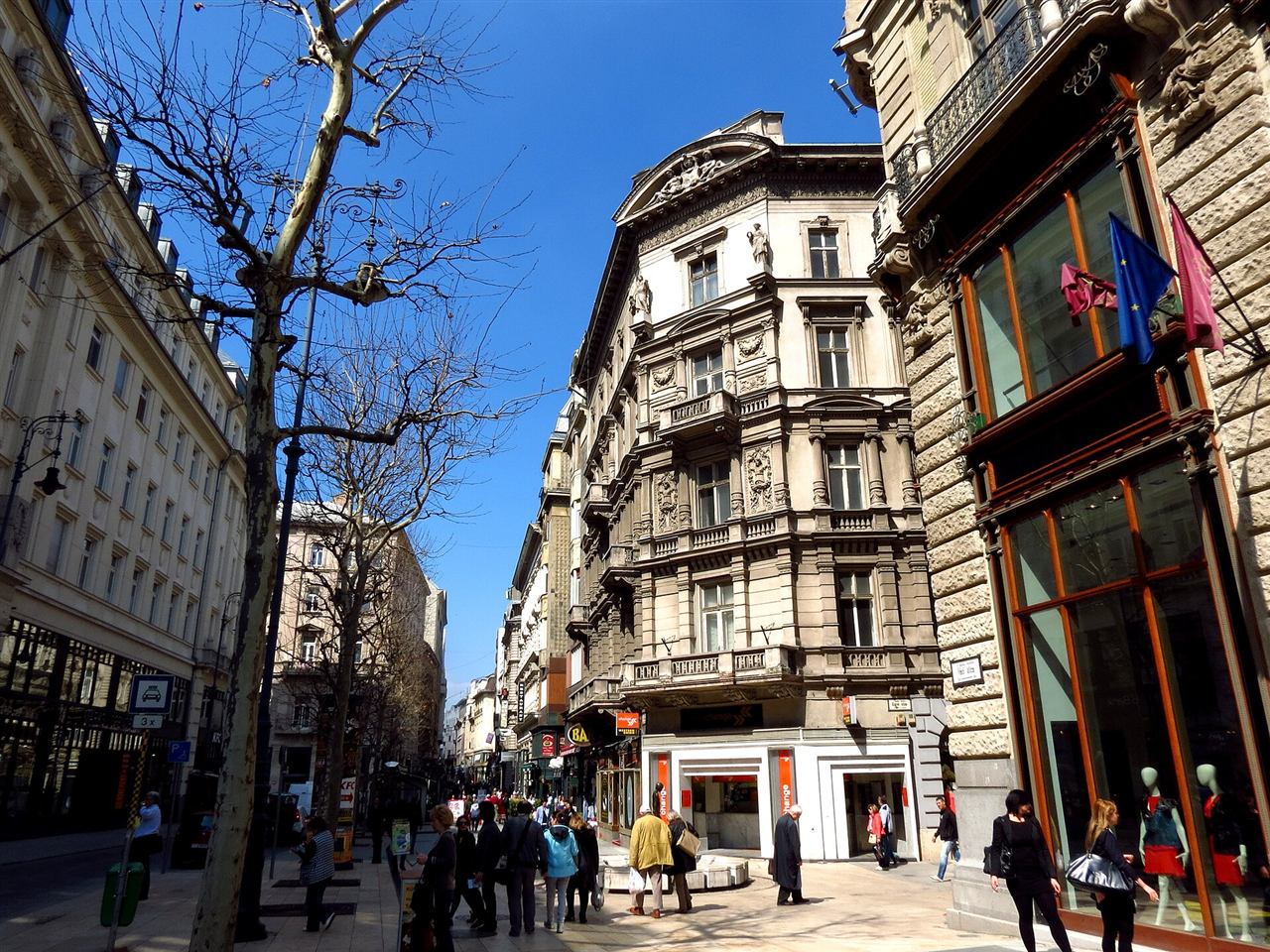
Photo: xorge via Wikimedia Commons, CC BY-SA 2.0
_(13227337414).jpg)
At a Glance
- District V combines two older districts, Belváros (the historic inner city) and Lipótváros (a 19th-century planned extension), under one administrative name.
- It holds the Hungarian Parliament, St. Stephen's Basilica, the Great Market Hall's northern edge, and the pedestrian shopping street Váci utca.
- Three metro lines, M1, M2, and M3, converge at Deák Ferenc tér on the district's edge, making it one of the best-connected areas in the city.
- Prices for dining and lodging here generally sit at the higher end of the city's range, especially directly on or near Váci utca.
- The district quiets down earlier at night than the Jewish Quarter, trading nightlife for a calmer, more polished feel.
- Walking across the entire district, river to river edge, takes well under 30 minutes, making it one of the most compact central bases available.
In this guide
District V is the administrative name for what most visitors simply think of as downtown Budapest, and it's actually the fusion of two older neighborhoods with different personalities: Belváros, the medieval inner city, and Lipótváros, a more formal 19th-century extension built up around government buildings. Understanding that split helps explain why one end of the district feels like a dense old-town grid and the other feels like a planned civic center. This guide focuses specifically on what District V offers day to day, separate from the broader district comparisons covered elsewhere on this site.
What District V Actually Covers: Belváros and Lipótváros
Belváros, the southern half, is the oldest part of central Pest, with narrow streets, the Great Market Hall near its southern edge, and the pedestrian zone around Váci utca. Lipótváros, to the north, was laid out later with wider, more formal streets, and it's home to the Hungarian Parliament and most of the district's embassies and ministries. The practical effect is that the southern end feels commercial and dense while the northern end feels more spacious and official.
| Area | Feel | Key Landmarks | Price Tier |
|---|---|---|---|
| Belváros (south) | Dense, commercial, historic | Váci utca, Great Market Hall, Danube Korzó | Higher |
| Lipótváros (north) | Formal, spacious, institutional | Parliament, St. Stephen's Basilica | Moderate to higher |
Walking the Danube Korzó Promenade
The riverside promenade, known as the Danube Korzó, runs along District V's western edge and offers one of the most direct views across to the Castle District and Gellért Hill on the Buda side. It's a natural route for an evening walk and connects easily to the Chain Bridge, making it a practical link if you're weighing a day trip across the river covered in Buda or Pest: which side is better for your trip.
The Landmarks That Define the District
The Hungarian Parliament dominates the northern riverside, and its visiting logistics are detailed in the Hungarian Parliament visiting guide. A short walk south, St. Stephen's Basilica anchors a large square of its own; see the dedicated St. Stephen's Basilica guide for what to expect before you go. Toward the southern edge of Belváros, the Great Market Hall marks the unofficial boundary with District IX, and its food stalls and souvenir level are covered in the Great Market Hall guide.
Váci Utca and Shopping in District V
Váci utca, the district's main pedestrian shopping street, runs nearly the full length of Belváros and mixes international retail with souvenir shops and a steady run of restaurants aimed squarely at visitors. Prices along this specific street tend to run higher than a block or two away in either direction, and it's worth comparing a restaurant's posted menu before sitting down, a habit worth building into any meal in the city.
What It's Like to Stay Overnight Here
Staying in District V means being within walking distance of nearly every major central sight, at the cost of paying a premium for that convenience and, in many of the district's older buildings, not having an elevator. Nights are generally calmer here than in the Jewish Quarter to the east, since the district leans toward upscale dining and shopping rather than late-night bars. For how this compares with the city's other central options, see where to stay in Budapest for your first visit.
Getting Around the District on Foot and by Metro
District V is compact enough to cross on foot, river to its eastern edge, in under 30 minutes, and Deák Ferenc tér, where all three metro lines meet, sits right at its boundary. That makes it one of the easiest places in the city to reach without a transfer, useful for arrivals from the airport and for departures toward a day-trip starting point alike.
Common Mistakes to Avoid
- Eating at the first restaurant seen on Váci utca without checking the posted menu; prices there run noticeably higher than a few blocks away.
- Confusing Belváros and Lipótváros as interchangeable when they have distinct character and different landmark concentrations.
- Booking a historic building in the district without confirming elevator access, which isn't universal in older Belváros properties.
- Assuming District V has the same nightlife density as the Jewish Quarter; it generally winds down earlier in the evening.
- Skipping the Lipótváros side entirely in favor of Belváros, and missing the Parliament area's distinct, more spacious character.
Frequently Asked Questions
What's the difference between Belváros and Lipótváros?
Belváros is the older, denser southern part of District V, built around narrow historic streets and the Váci utca shopping zone. Lipótváros is the more formally planned northern part, home to the Parliament and most of the district's embassies, with wider streets and a more spacious feel.
Is District V too touristy to be worth staying in?
It's touristy in the sense that it's central and well-known, but it's also genuinely the most convenient base for reaching the city's major sights on foot. The trade-off is higher prices, not a lack of authenticity.
How do I get from District V to the airport or a train station?
Deák Ferenc tér, where all three metro lines converge, sits at the district's edge, giving direct or near-direct connections to both Keleti and Nyugati train stations and to standard airport transfer routes.
Is Váci utca worth walking even if I don't plan to shop?
Yes, it's a reasonable orientation walk through the heart of Belváros and connects naturally to the Danube Korzó promenade and several landmark squares, even if you skip the shops themselves.
Are restaurants in District V overpriced?
Restaurants directly on Váci utca and immediately around the main squares tend to charge a premium for location. Moving a block or two away, particularly into Lipótváros, generally brings prices down without losing much convenience.