Landmarks & History
St. Stephen's Basilica: What to Know Before You Go
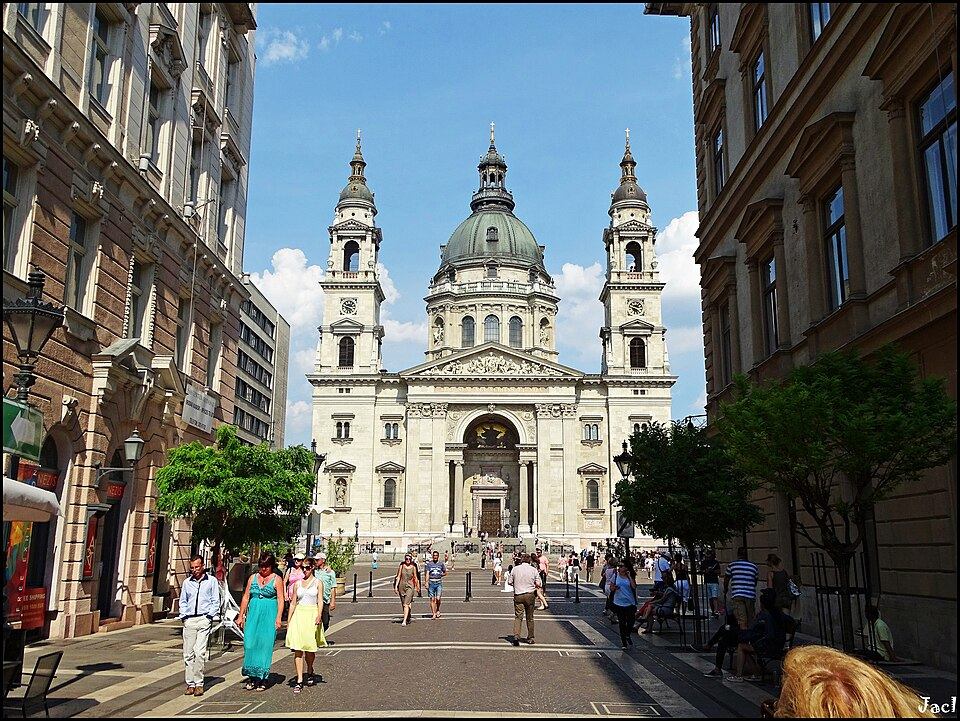
Photo: Jose A. (sky_hlv) via Wikimedia Commons, CC BY 2.0

At a Glance
- St. Stephen's Basilica is the largest church in Budapest and shares an informal height limit with the Parliament building across town.
- The basilica holds a relic known as the Holy Right — the preserved hand of Hungary's first king.
- The dome observation deck is reached by elevator and a shorter stair climb, with panoramic views over central Pest.
- The nave is generally free to enter with a requested donation; the dome and treasury are separately ticketed.
- Mass times and occasional concerts affect visitor access, so tourist hours and worship hours don't always overlap.
- It sits right in District V, making it easy to combine with a downtown Pest walk.
In this guide
St. Stephen's Basilica anchors a square in the middle of downtown Pest, and it's worth more than the five-minute photo stop many itineraries give it. The building carries real symbolic weight in how the city's skyline was shaped, holds one of the country's more unusual religious relics, and offers one of the best rooftop views in central Budapest for anyone willing to queue for the dome. This guide covers what's actually free, what isn't, and how the basilica fits into a downtown day.
The Church That Shares Budapest's Skyline Height Limit
For decades, an informal rule has kept most buildings in central Budapest from rising above the height of this basilica's dome and the dome of the Hungarian Parliament Building across the river — the two most symbolically important domes in the city, built to roughly match each other. Whether or not you care about zoning history, it explains something you'll notice on the ground: almost nothing nearby competes with the basilica for the skyline, which is part of why its observation deck offers such an open view.
Why It's Named for Hungary's First King
The basilica is dedicated to Stephen I, Hungary's first king and the monarch credited with establishing Christianity as the kingdom's state religion around the turn of the first millennium. Construction stretched across more than five decades in the 19th century, partly because a structural failure partway through forced significant rebuilding under a different architect, which is part of why the finished building reads as more architecturally unified than most multi-decade projects usually do.
Getting a Look at the Holy Right Hand Relic
Inside a side chapel, the basilica displays what's known as the Holy Right — the mummified right hand of King Stephen himself, kept as a religious relic for centuries and still central to an annual procession. It's a genuinely unusual thing to see up close, and it draws a different kind of attention than the building's architecture does. A small donation is often requested to view it, separate from basilica entry itself.
Visiting the Dome Observation Deck
A combination of elevator and a shorter stair climb takes visitors up to a walkway that circles the dome's base, looking out over the rooftops of central Pest toward the river and the hills of Buda beyond. Because so little around the basilica rises to a comparable height, the view is unusually open for a city-center lookout. This requires a separate ticket from basic church entry, and lines build during the middle of the day in peak season.
| What you want to do | Ticket needed | Typical time required |
|---|---|---|
| Walk through the nave | Free entry, donation requested | 15–30 minutes |
| View the Holy Right relic | Small donation for the chapel | 5–10 minutes |
| Climb to the dome observation deck | Separate paid ticket | 30–45 minutes including the line |
Entry, Donations and What's Actually Free
Walking through the main nave is generally free, with a donation requested at the door rather than a strict admission fee. The dome climb and, at times, a treasury or crypt area carry their own separate ticket costs. These structures and amounts shift, so treat anything you read here or elsewhere as a starting point and confirm current practice with the basilica's own visitor information before you go.
When the Basilica Gets Crowded
Mass times take priority over sightseeing access, so tourist visiting hours and worship hours don't always line up, and parts of the nave may be off-limits to casual visitors during a service. Occasional organ recitals and classical concerts also use the space in the evening. Outside of those windows, late morning through mid-afternoon tends to be the busiest stretch for both the nave and the dome line.
What's Nearby If You Want to Make a Morning of It
The basilica sits inside this site's District V downtown guide area, within easy walking distance of the Danube promenade and several of the city's best-known historic coffeehouses — a natural follow-on covered in this site's guide to Budapest's coffeehouse culture. Treat the basilica as the anchor of a downtown morning rather than an isolated stop, since the surrounding blocks reward slower walking more than a quick drive-by would suggest.
Common Mistakes to Avoid
- Assuming the nave and the dome climb use the same ticket — they don't, and the dome requires its own separate purchase.
- Arriving during a scheduled Mass expecting full sightseeing access, when parts of the nave may be restricted to worshippers at that time.
- Skipping the donation at the door because entry isn't formally charged — the basilica relies on these donations for upkeep.
- Climbing the dome at midday in peak season without expecting a real line, rather than visiting earlier or later when it moves faster.
- Treating the basilica as a five-minute photo stop and missing the Holy Right relic chapel, which many visitors don't realize is there.
Frequently Asked Questions
Is St. Stephen's Basilica free to visit?
The main nave is generally free to enter, with a donation requested rather than a required fee. The dome observation deck and sometimes the treasury or crypt require a separate paid ticket.
What is the Holy Right relic?
It's the preserved right hand of King Stephen I, Hungary's first king, displayed in a side chapel inside the basilica and central to an annual religious procession.
Is the dome climb worth it?
Many visitors find it one of the best central viewpoints in Pest, largely because so little nearby rises to a comparable height, giving the walkway an unusually open view over the rooftops.
Can I visit during Mass?
Sightseeing access can be limited during services, since worship takes priority. Check the basilica's posted schedule and plan a visit outside those windows if your goal is unrestricted access to the whole nave.
How does the basilica relate to the Parliament building's height?
The two domes were built to roughly match each other in height, part of a long-standing informal rule that's kept much of central Budapest from rising above either building.