Neighborhoods
Buda or Pest: Which Side Is Better for Your Trip?
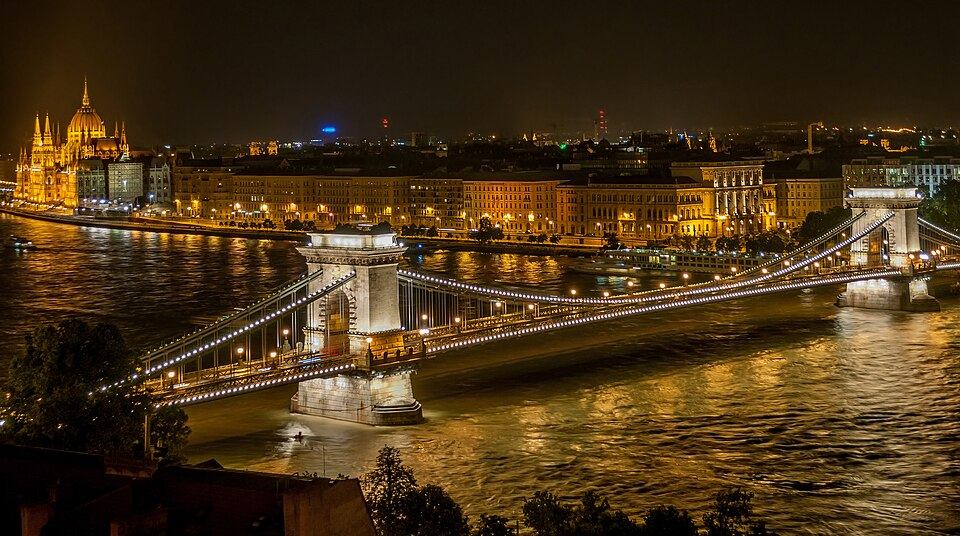
Photo: Wilfredor (Wilfredo R. Rodriguez H.) via Wikimedia Commons, CC0 1.0 (Public Domain)

At a Glance
- Buda and Pest were separate towns until an 1873 merger (with Óbuda) created modern Budapest, and they still feel like two different places.
- Pest is flat, dense, and grid-like; Buda is hilly, green, and spread out, with far fewer restaurants per block.
- Only a handful of bridges cross the Danube, so your choice of side affects how often you'll plan a crossing into your day.
- Pest suits travelers who want to walk everywhere and change plans on the fly; Buda suits travelers prioritizing quiet and views over convenience.
- A short stay (two or three nights) usually works better anchored on one side rather than switching hotels mid-trip.
- Longer trips can reasonably split time between both sides without much lost efficiency.
In this guide
- Two Cities, One Skyline: Why Buda and Pest Feel So Different
- What Staying in Pest Is Actually Like
- What Staying in Buda Is Actually Like
- Crossing the River: How the Bridges and Transit Connect the Two Sides
- Buda vs. Pest: A Side-by-Side Breakdown
- Which Side Fits Which Kind of Traveler
- Can You Split Your Stay Between Both Sides?
Buda and Pest aren't just two halves of one city; they were two separate towns for most of their history, and the terrain still tells that story. Deciding which side to sleep on affects far more than your view: it changes your daily walking distances, how often you'll cross a bridge, and what kind of evening you'll have after dinner. This comparison sets the two sides against each other directly, rather than breaking down individual districts, so you can decide which half of the river actually fits how you travel.
Two Cities, One Skyline: Why Buda and Pest Feel So Different
Buda, Pest, and the smaller town of Óbuda were administratively joined into a single city in 1873, but the geography never merged. Buda sits on the hilly western bank, shaped by Castle Hill and the wooded ridges behind it, while Pest spreads out flat and grid-patterned on the eastern bank, laid out for commerce and crowds. That split in terrain is why Buda feels residential and scenic while Pest feels urban and commercial, and it's the root of almost every practical difference between the two.
What Staying in Pest Is Actually Like
Base yourself in Pest and you'll likely spend most of your trip on foot or on the metro, moving between the Basilica, the Parliament, the Great Market Hall, and a dense grid of restaurants and cafés. Evenings tend to involve walking rather than planning a crossing, since dinner, a bar, and your hotel are often within the same half-mile. The trade-off is noise and density: Pest's energy doesn't fully quiet down at night in the busier districts, particularly around District VII.
What Staying in Buda Is Actually Like
Buda runs at a different pace. Streets near Castle Hill and the Víziváros riverside are quieter, greener, and more residential, and many hotels here lean into views back across the Danube toward Pest's skyline rather than proximity to nightlife. You'll likely rely more on buses, the funicular, or a tram along the river to get into your sightseeing day, and dinner options thin out noticeably once you move away from the main tourist streets. For what's actually worth seeing once you're up there, see the Castle District guide.
Crossing the River: How the Bridges and Transit Connect the Two Sides
A limited number of bridges, including the Chain Bridge, Elisabeth Bridge, and Liberty Bridge, carry nearly all foot and vehicle traffic between the two banks, and several tram lines run along both riversides and across these crossings. This isn't a major obstacle, a crossing on foot or by tram typically takes well under 20 minutes, but it does mean a Buda base adds a small, repeatable tax to every day that starts or ends in Pest. The public transportation guide covers exactly which lines make these crossings easiest.
Buda vs. Pest: A Side-by-Side Breakdown
| Factor | Pest | Buda |
|---|---|---|
| Terrain | Flat, walkable grid | Hilly, winding streets |
| Density of restaurants/shops | Very high | Low to moderate |
| Noise at night | Moderate to high in central districts | Generally low |
| Major landmarks | Parliament, Basilica, synagogues, markets | Castle Hill, Gellért Hill, Fisherman's Bastion |
| Transit density | Dense metro and tram network | Buses, trams, one funicular |
| Typical fit | First-timers, short trips, nightlife | Longer trips, quiet, views |
Which Side Fits Which Kind of Traveler
If this is your first trip and you're working with two or three days, Pest is the more efficient base, and the full reasoning behind that is laid out in where to stay in Budapest for your first visit. If you've already covered the highlights on a previous trip, or you simply value a quiet street and a view over walkability, a Buda hotel near the District V side of the river (a short crossing away) can be the better fit for a return visit.
Can You Split Your Stay Between Both Sides?
On a trip of five nights or longer, splitting your stay, a few nights in Pest followed by a few on Buda's quieter streets, can work well and gives you a genuine feel for both halves of the city. For shorter trips, the time and effort of packing and switching hotels usually isn't worth it; planning a two-day itinerary that crosses into Buda for a few hours accomplishes nearly the same thing without the logistics.
Common Mistakes to Avoid
- Picking a Buda hotel for the view without accounting for the extra 15 to 25 minutes added to each direction of a sightseeing day.
- Assuming Buda has the same restaurant and nightlife density as Pest; many Buda neighborhoods go quiet well before 9 p.m. outside the main tourist streets.
- Switching hotels mid-trip on a short visit, losing half a day to checking in and out for a change that a few hours of sightseeing could have accomplished instead.
- Not checking which bridge or tram line actually connects your hotel to the sights you care about before booking.
- Treating “Budapest” as one undifferentiated area when comparing hotel listings, rather than checking which side of the river a specific address sits on.
Frequently Asked Questions
Is Buda or Pest better for a first-time visitor?
Pest is generally better for a first visit because it's flatter, denser with sights and restaurants, and better connected by metro. Buda is a strong choice for a return trip or for travelers who specifically want quiet streets and views over walkability.
How long does it take to get from Buda to Pest?
Crossing the Danube by tram, bus, or on foot across one of the central bridges typically takes well under 20 minutes between the riverside areas of each side. Trips from hillside parts of Buda to central Pest sights can take closer to 30 to 40 minutes depending on the starting point.
Is one side of the river cheaper than the other?
Not consistently. A view-facing Buda hotel can cost as much as a central Pest room, while a basic guesthouse away from the river on either side can be comparatively affordable. It's worth comparing specific listings rather than assuming a side-wide price difference.
Does it make sense to split a short trip between Buda and Pest hotels?
For trips of two or three nights, switching hotels usually costs more time in checking in and out than it saves, and a few hours exploring Buda as part of a day trip from a Pest base accomplishes much the same thing. Splitting works better on trips of five nights or more.
Which side has more nightlife?
Pest, by a wide margin, particularly in and around District VII's ruin bar scene. Buda is quieter at night across nearly all of its neighborhoods, which is part of its appeal for travelers who want a calmer evening.