Thermal Baths
Budapest Thermal Baths for First-Time Visitors
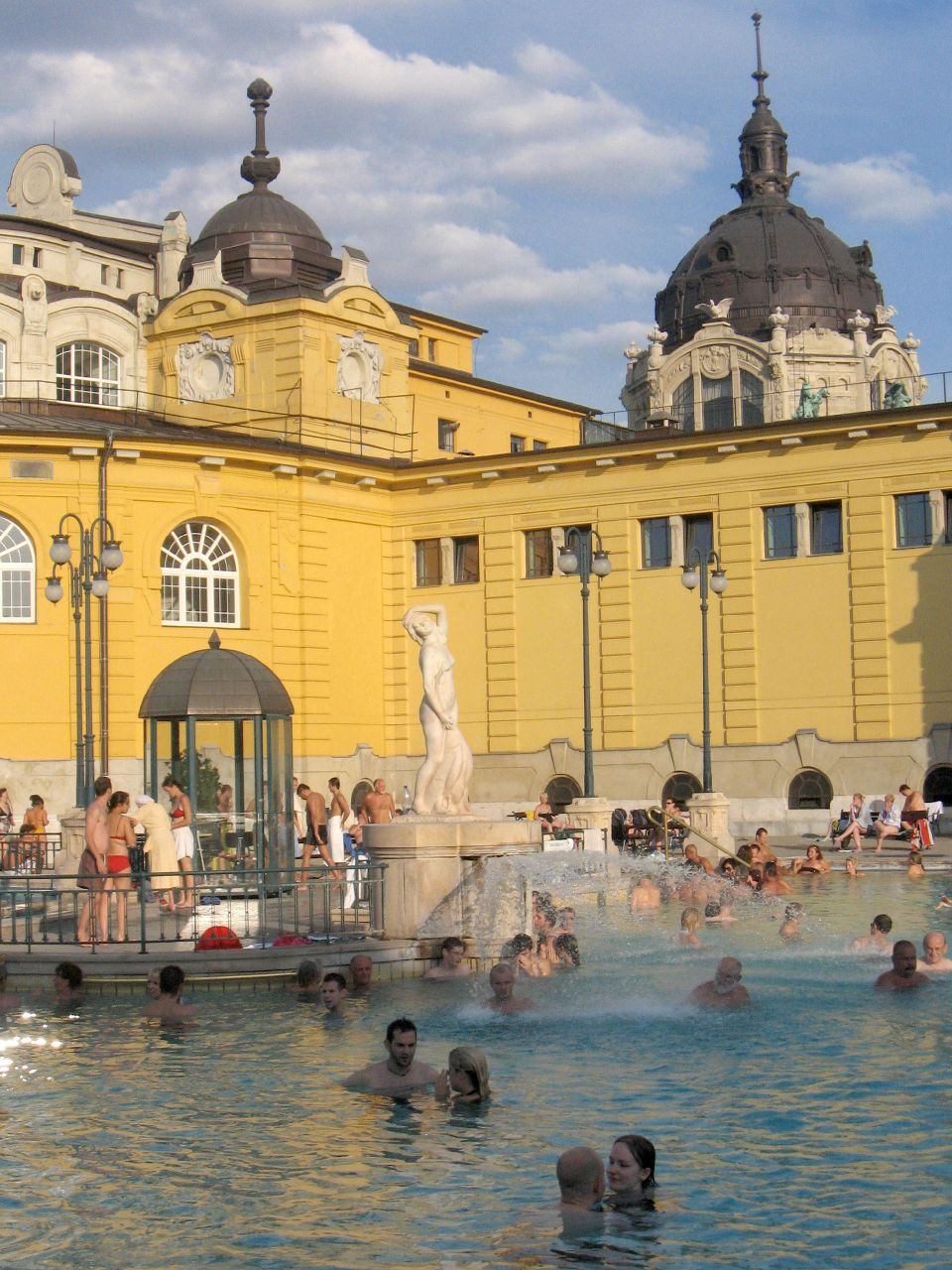
Photo: Guillaume Baviere via Wikimedia Commons, CC BY 2.0
.jpg)
At a Glance
- Budapest sits on more than a hundred natural hot springs, and bathing in them has been routine city life since Roman and Ottoman times, not a modern tourist invention.
- Szechenyi, Gellert, Rudas and Lukacs each have a genuinely different atmosphere — picking the wrong one for your mood is the most common first-timer disappointment.
- Plan at least two to three hours for a first visit; rushing through in under an hour defeats the point.
- The locker, cabin and wristband system takes a few minutes to figure out the first time, so arrive earlier than you think you need to.
- A swim cap, rubber sandals and a dry bag for wet items make the whole visit noticeably easier.
- Thermal bathing pairs best with a slower-paced day rather than being squeezed between two major sightseeing stops.
In this guide
- What Makes a Budapest Thermal Bath Different From a Spa Day
- A Quick History: From Ottoman Domes to Habsburg-Era Halls
- The Main Baths Worth Knowing About
- Choosing Your First Bath: Indoor, Outdoor or Both
- How a Typical Visit Works, Start to Finish
- How Much Time to Set Aside
- Who Should Think Twice, and a Few Practical Notes
Soaking in a geothermal pool is one of the few things to do in Budapest that locals actually do too, rather than something staged purely for visitors. The city is built on a network of natural hot springs, and bathing in them has been part of daily life here since the Roman era, through centuries of Ottoman rule, and into the grand civic bathhouses built under the Austro-Hungarian monarchy. For a first-time visitor, the number of baths and the unfamiliar routines around them can feel more intimidating than the swimming itself. This guide is about orientation: what bathing culture here actually is, how a visit unfolds from arrival to exit, and which specific bath deserves your time, with links to deeper guides once you've made that call.
What Makes a Budapest Thermal Bath Different From a Spa Day
A thermal bath in Budapest isn't a resort amenity or a pampering treat you book for a special occasion — it's closer to a public institution, used by residents the way a neighborhood pool or gym might be used elsewhere. The water itself is naturally heated underground and carries dissolved minerals that vary from site to site; Hungarians have long treated these waters as having therapeutic value for joints and circulation, and many bath complexes grew up alongside medical bathing traditions. That civic, everyday character is worth holding onto as you plan: you'll see retirees doing slow laps next to tourists taking photos, and both uses are equally normal.
A Quick History: From Ottoman Domes to Habsburg-Era Halls
Hungary's bathing culture layers several eras on top of each other. During roughly a century and a half of Ottoman control, Turkish rulers built domed bathhouses in the hammam style, some of which still operate today in updated form. Centuries later, under Austro-Hungarian rule in the late 1800s and early 1900s, the city built larger, more theatrical bath palaces with elaborate Art Nouveau or neo-baroque architecture, designed as much to impress as to heal. That history is why a single afternoon of bathing in Budapest can swing between a low, tiled Ottoman dome and a soaring, colonnaded hall — they're genuinely different buildings from different centuries, not variations on a theme.
The Main Baths Worth Knowing About
You don't need to research every bathing option in the city; four complexes cover almost everything a visitor is likely to want.
| Bath | Architectural Era | General Atmosphere |
|---|---|---|
| Szechenyi | Early 1900s neo-baroque | Large, photogenic, most visited by tourists |
| Gellert | Early 1900s Art Nouveau | Grand, decorative, attached to a historic hotel |
| Rudas | 16th-century Ottoman core | Smaller, historic, rooftop pool with city views |
| Lukacs | 19th-century, expanded later | Lower-key, popular with Budapest residents |
The Szechenyi Thermal Bath guide covers the most visited of the four in detail, while the comparison of Gellert, Rudas and Lukacs walks through how those three differ from each other.
Choosing Your First Bath: Indoor, Outdoor or Both
If you want the classic postcard image of steam rising off an outdoor pool surrounded by a grand façade, Szechenyi is built for exactly that and keeps its outdoor pools running through the colder months, which makes it a strong option even outside summer — see the dedicated guide on visiting the baths in winter if your trip falls in that season. If you'd rather have a smaller, more historic experience with fewer crowds, the Ottoman-era feel of Rudas or the local, unpolished character of Lukacs may suit you better than the busiest option in the city.
How a Typical Visit Works, Start to Finish
Most baths follow a similar sequence. You buy entry at a ticket counter or kiosk, which gets you a wristband or chip that also unlocks a locker or private changing cabin. You change, shower before entering any pool (this is expected, not optional), and then move freely between pools, saunas and steam rooms at your own pace. Many complexes have a snack bar or café inside, so you don't need to exit and re-enter to eat. The full rundown of what to bring, what's required, and what tends to trip up first-timers is covered in the bath etiquette and packing guide, which is worth reading before you go rather than after.
How Much Time to Set Aside
Give yourself a minimum of two hours, and ideally three to four if you want to move through multiple pools, a sauna, and some genuine downtime rather than a quick dip. Because of that time commitment, bathing tends to work best as the anchor of a lighter day rather than an add-on to an already packed sightseeing schedule — travelers following a three-day Budapest itinerary often do best building one bathing afternoon into a day with fewer other stops.
Who Should Think Twice, and a Few Practical Notes
Thermal bathing is physically demanding in ways that are easy to underestimate: moving between hot pools, saunas and cooler plunge pools raises and drops your heart rate repeatedly, and dehydration sneaks up on people who skip water breaks. If you have a cardiovascular condition, are pregnant, or have any condition affected by heat, talk to a doctor before planning a visit rather than assuming it's automatically fine. Older bath buildings also weren't designed with modern accessibility standards in mind, and specifics vary a great deal by site and by which part of the complex you're in.
Common Mistakes to Avoid
- Budgeting less than an hour for a visit — the changing-room learning curve alone eats into a short visit, and you won't get the point of the experience.
- Not knowing in advance that some pools and saunas require a swim cap, and discovering it only at the entrance.
- Assuming every Budapest bath has the same tourist-friendly, English-signage experience as Szechenyi, then feeling lost at a quieter, more local bath.
- Skipping the pre-pool shower, which is both expected etiquette and, practically, enforced by staff at most baths.
- Trying to fit two baths into one day on a first visit instead of experiencing one properly.
Frequently Asked Questions
Do I need to be a strong swimmer to visit a thermal bath?
No. Most pools have large standing-depth areas, and plenty of visitors spend their whole visit without swimming a single lap. The baths are built around soaking and moving between temperatures, not lap swimming, though a dedicated swim lane often exists for people who want one.
Are the baths mixed-gender?
It depends on the bath and sometimes the specific day. Larger baths like Szechenyi are generally mixed throughout, while some of the historic Ottoman-era bathhouses have had single-sex sections or days in the past. Check the specific guide for the bath you're considering and confirm current policy before you go, since this is exactly the kind of detail that shifts over time.
Can I bring my kids to a thermal bath?
Families visit the larger baths regularly, especially Szechenyi, which has shallower pools well suited to children. Smaller or more historic baths lean adult-oriented in practice, even without a formal age restriction. If traveling with kids, read ahead on which specific bath fits best rather than picking at random.
Should I visit more than one bath on a short trip?
For a first visit, one properly unhurried session usually beats rushing between two. If you have extra time and want to compare experiences directly, the breakdown of Gellert, Rudas and Lukacs is a better place to start than trying to squeeze all three into a single day.
Is a thermal bath worth it if I'm only in Budapest for a day or two?
It can be, but it's a real time investment of at least a couple of hours, so weigh it against everything else on a short itinerary. On very tight schedules, some visitors save bathing for a return trip rather than rushing it.