Thermal Baths
Gellert, Rudas or Lukacs: Which Budapest Bath Should You Choose?
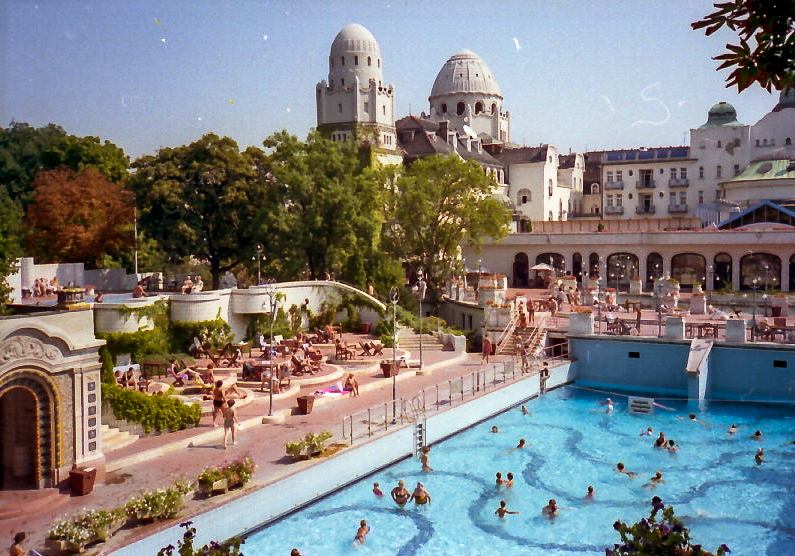
Photo: Szilas via Wikimedia Commons, CC BY-SA 4.0

At a Glance
- Gellert, Rudas and Lukacs each offer a different experience from Budapest's most famous bath, Szechenyi, and from each other.
- Gellert is known for its Art Nouveau decoration, but there have been unconfirmed reports about its operating status, so verify directly before planning around it.
- Rudas has a genuine Ottoman-era core and a rooftop pool with panoramic Buda and Danube views.
- Lukacs draws a more local, less tourist-oriented crowd than the other three major baths.
- All three sit on the Buda side of the river, making them easy to pair with Castle District sightseeing.
- Picking between them comes down to what kind of atmosphere you want, not which one is objectively "best."
In this guide
- Gellert Baths: Art Nouveau Grandeur, and a Status Note
- Rudas Baths: Ottoman-Era Atmosphere and a Rooftop Pool
- Lukacs Baths: Where Locals Go
- Side-by-Side Comparison
- Matching a Bath to Your Travel Style
- Combining a Bath Visit With a Buda-Side Day
- Getting There From Pest, and How Each Bath Fits a Route
- How the Architecture and History Differ
- Choose Gellért, Rudas or Lukács: Decision Rules
- Planning the Visit Itself
Once you move past Szechenyi, Budapest's bathing scene gets more interesting, and more specific to what kind of experience you're after. Gellert, Rudas and Lukacs are the three other baths most visitors weigh against each other, and they genuinely don't overlap much: one leans grand and decorative, one leans historic and compact, and one leans local and unpolished. This guide compares the three directly so you can match a bath to your travel style rather than guessing from a map, and it assumes you've already ruled out the busier, more tourist-heavy Szechenyi Thermal Bath in favor of something smaller.
Gellert Baths: Art Nouveau Grandeur, and a Status Note
Gellert is attached to a historic hotel of the same name and is known for elaborate Art Nouveau tilework, stained glass and a grand indoor pool hall that's often described as one of the most visually striking bathing spaces in the city. It sits at the base of Gellert Hill on the Buda side, within walking distance of the Liberty Bridge. One important caveat: there have been unconfirmed rumors circulating about renovation work or a change in Gellert's operating status. Treat this as something to verify directly before building a trip around it rather than assuming either that it's fully open or that it's closed — check current status close to your travel dates through official channels or a current tourist information point before finalizing plans.
Rudas Baths: Ottoman-Era Atmosphere and a Rooftop Pool
Rudas traces its core structure back to the Ottoman period, and its domed central pool still carries that compact, low-lit, centuries-old character more directly than any other major bath in the city. It also has a rooftop pool added in a later renovation, which opens up panoramic views over the Danube and the Pest skyline — a genuinely different vantage point from anything the other baths offer. Rudas has historically run some single-sex sessions alongside mixed hours, a holdover from its Ottoman-bathhouse origins, so if that matters to your plans, confirm the current schedule rather than assuming it matches what you may have read elsewhere.
Lukacs Baths: Where Locals Go
Lukacs sits further north along the Buda bank and has a noticeably different feel from the other three: fewer tour groups, a more functional and less ornate layout, and a steady base of Budapest residents who treat it as a routine part of their week rather than a sightseeing stop. It won't give you the architectural wow of Gellert or the historic novelty of Rudas, but it's a reasonable choice if you want to experience bathing culture the way residents actually use it, without English signage or a line of visitors photographing the ceiling.
Side-by-Side Comparison
| Bath | Best For | Crowd Level | Standout Feature |
|---|---|---|---|
| Gellert | Architecture and photos | High (when open — verify status) | Art Nouveau pool hall |
| Rudas | History and views | Moderate | Ottoman dome and rooftop pool |
| Lukacs | A local, low-key visit | Lower | Everyday resident atmosphere |
Matching a Bath to Your Travel Style
If you want the most photogenic indoor hall and don't mind planning around current opening status, lean toward Gellert, but have a backup in mind in case it isn't operating as you'd hoped. If you want a distinctly historic atmosphere with a modern payoff at the top, Rudas is hard to beat. If you'd rather skip the tourist-facing version of bathing culture entirely and see how it actually functions for residents, Lukacs is the better call. None of the three is a mistake — they're just different trips. Whichever one you pick, review the bath etiquette and packing guide beforehand, since locker systems, swim-cap rules and showering expectations apply across all of them.
Combining a Bath Visit With a Buda-Side Day
Because all three sit on the Buda side of the Danube, any of them pairs naturally with a day built around Buda sightseeing. Gellert and Rudas in particular are a short trip from Castle District and the broader Buda Castle complex, so a morning of hill-climbing and history followed by an afternoon soak is a natural structure for a Buda-focused day. If you haven't yet settled on where to start, the overview guide to Budapest's thermal baths covers how these three stack up against Szechenyi as well.
Getting There From Pest, and How Each Bath Fits a Route
All three baths are on the Buda bank, but the approach differs, and transit is often what settles the choice. Gellért is the easiest first-timer stop: it sits beside the Hotel Gellért at the Buda end of Liberty Bridge (Szabadság híd), with the M4 at Szent Gellért tér and trams 19, 41, 47 and 49 stopping at or near the square. Rudas is a short walk north along the embankment at Döbrentei tér, served by trams 19 and 41, which run the length of the Buda riverbank. Lukács sits further north on Frankel Leó út, a walk of roughly ten to fifteen minutes from the Buda end of Margaret Bridge (Margit híd), which trams 4 and 6 reach from the Pest side; in other words, it is out of the way of the main sightseeing loops, which partly explains its local feel.
How the Architecture and History Differ
Gellért opened in 1918 and is a flagship of Hungarian Art Nouveau, designed by Ármin Hegedűs, Artúr Sebestyén and Izidor Sterk; the mosaics, columns and stained glass of the hall are the reason people come. Rudas is older by centuries: its octagonal central pool and dome date to the Ottoman occupation in the sixteenth century, which is why the room feels like a low, warm cave of stone rather than a palace. Lukács is a different kind of heritage: a medical bath in a complex of mostly nineteenth- and twentieth-century buildings, with a courtyard wall of marble plaques where grateful patients over the decades left thanks for cures. Ask yourself whether you want to look at a beautiful room, sit in a very old one, or soak in a working health bath.
Choose Gellért, Rudas or Lukács: Decision Rules
- Choose Gellért if the building matters more to you than the water, you want a short, low-effort stop between Liberty Bridge and Gellért Hill, and you have confirmed that it is operating.
- Choose Rudas if you want a historic dome plus an open-air rooftop view of the Danube, especially at dusk, or if you like a mix of a traditional section and a modern wellness section.
- Choose Lukács if you want a quiet weekday soak among residents, you do not need dramatic décor, and you do not mind a slightly longer trip from the center.
- Choose none of these and head to Széchenyi if you want big outdoor pools and an easy M1 ride from Heroes' Square.
Planning the Visit Itself
Plan on two to three hours at any of the three. Most baths have a locker or cabin system with a wristband or key; take your time at the entrance to understand which access type you bought, and keep the band on until you exit. Bring or be ready to rent a towel, a swimsuit and flip-flops, and treat the thermal pools as places to soak rather than swim laps. A short soak followed by a rest, then a second soak, is easier on the body than staying in hot water continuously. Dress rules, cap rules and locker details are in the bath etiquette and packing guide, and the rules for each bath differ in small ways, so review the official page of the one you choose.
| If your day looks like this | Best match |
|---|---|
| Morning on Gellért Hill, afternoon free | Gellért or Rudas, both a few minutes from the foot of the hill |
| Castle Hill in the morning, tired legs by 3 p.m. | Rudas, reached by tram 19 or 41 along the embankment |
| Late-evening soak, sunset view | Rudas rooftop pool; check current evening schedule |
| A quiet weekday with no sightseeing agenda | Lukács |
Common Mistakes to Avoid
- Building an entire day's plan around Gellert without checking its current operating status first.
- Expecting Lukacs to have the same tourist infrastructure and English signage as Szechenyi or Gellert.
- Assuming Rudas is fully mixed-gender at all times without checking the current day's schedule.
- Trying to visit all three in one day instead of picking the one that actually matches what you want from the experience.
- Not pairing the visit with nearby Buda-side sightseeing, given how close all three sit to Castle Hill.
Frequently Asked Questions
Is Gellert currently open to visitors?
Status has been uncertain due to unconfirmed renovation rumors, so this is genuinely something to verify close to your travel dates through an official source or current tourist information point rather than relying on older articles, including this one.
Is Rudas mixed-gender?
Rudas has historically offered both mixed and single-sex sessions at different times, reflecting its Ottoman-bathhouse origins. If this affects your plans, confirm the current weekly schedule before you go.
Is Lukacs worth visiting as a tourist?
Yes, if you want a more authentic, less curated version of Budapest bathing culture. It's less visually dramatic than Gellert and less historically novel than Rudas, but it offers a genuine look at how residents actually use these baths.
Which of the three is least crowded?
Lukacs is generally the quietest of the three in terms of tourist traffic, with Rudas in the middle and Gellert typically the busiest when fully operating.
Can I visit more than one of these in a single day?
Physically possible given their proximity on the Buda side, but it tends to turn a relaxing activity into a rushed one. Picking one and giving it real time is usually the better experience.
Which bath is best for a first-time visitor who wants the least hassle?
Gellért and Rudas are the simplest to reach, since both sit on the Buda embankment with direct tram service. Rudas tends to be the more predictable choice at the moment, because Gellért's operating status should be verified first.
How should I move between hot and cool pools?
Start in a warmer pool for a short soak, rest, then cool off before returning, instead of staying in hot water for a long stretch. If you feel dizzy or lightheaded, get out and sit down, and check with a doctor beforehand if you have a heart condition or are pregnant.