Budapest Itineraries
Three Days in Budapest: The Complete First-Visit Plan
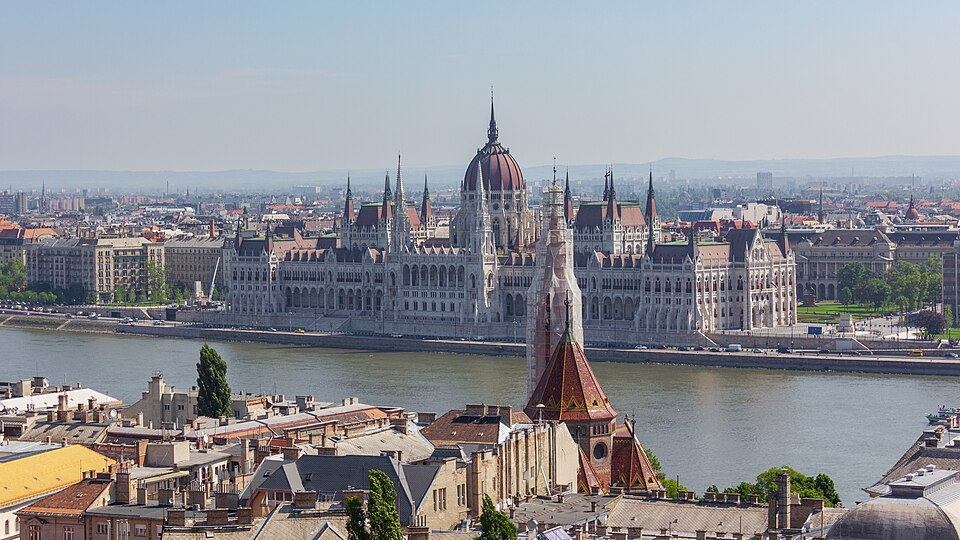
Photo: Perituss via Wikimedia Commons, CC0 1.0 (Public Domain)

At a Glance
- Each day in this plan stays within one cluster of neighborhoods, so the only long crossings happen once per day, not several times.
- Day one is the most physically demanding, with two hills, so it's placed first while your legs are freshest.
- A thermal bath appears on two of the three evenings; treat both as optional if you'd rather swap in extra museum time.
- Book a Hungarian Parliament interior tour as soon as your dates are fixed, since timed slots for this itinerary's day two sell out well ahead.
- Save the Dohany Street Synagogue for the morning on day three, since it closes well before the Jewish Quarter's evening activity starts.
In this guide
- How Three Days Breaks Down by Neighborhood
- Day 1 at a Glance: The Castle District and Gellert Hill
- Day 1 in Detail: Buda's Hilltop and Riverside
- Day 2 at a Glance: Pest's Government and Church Quarter
- Day 2 in Detail: Parliament, the Basilica and a Night Cruise
- Day 3 at a Glance: The Jewish Quarter, City Park and Szechenyi Baths
- Day 3 in Detail: Synagogue to Thermal Bath
- If a Rainy Day Lands in the Middle of Your Trip
Three days is enough to stop rushing between Budapest's two halves and instead give each day a real neighborhood focus. The plan below spends day one entirely on the Buda side, day two in Pest's government and church district, and day three moving from the Jewish Quarter out to City Park. It's built around how far apart these clusters actually sit, not just a list of landmarks in no particular order, so the walking and transit between stops stays realistic rather than theoretical.
How Three Days Breaks Down by Neighborhood
If you've already spent a day or two in the city, or you're coming from the shorter two-day itinerary, this plan adds a full third day centered on City Park and the Jewish Quarter rather than simply extending the same two days. The logic throughout is geographic: finish everything on one side of the Danube, or within one connected district, before moving to the next. If you map this plan out and feel like each day is still too packed, the four-day itinerary spreads the same stops across an extra day rather than cutting anything.
Day 1 at a Glance: The Castle District and Gellert Hill
| Time | Stops |
|---|---|
| Morning, 9:00–12:30 | Buda Castle, Hungarian National Gallery, Fisherman's Bastion, Matthias Church, Ruszwurm Confectionery |
| Midday, 12:30–13:30 | Lunch, walk down via Varkert Bazar |
| Afternoon, 13:30–16:00 | Gellert Hill and the Citadella, down toward Liberty Bridge |
| Evening, 18:00–20:30 | Rudas Thermal Bath, dinner nearby |
Day 1 in Detail: Buda's Hilltop and Riverside
Spend the morning on Castle Hill without rushing, since this is the one day built with enough time for a museum stop. Walk the Buda Castle complex, and if Hungarian art interests you, give the National Gallery an hour inside the same building block. Fisherman's Bastion and Matthias Church sit a short walk away, each worth about 45 minutes, and Ruszwurm Confectionery is the right place for a mid-morning pastry before heading back down. Rather than crossing into Pest at midday, continue south along the Buda riverbank toward Gellert Hill. The walk up to the Citadella and the Liberty Statue is the steepest stretch of the whole three days, but the payoff is the widest combined view of both riverbanks you'll get on this trip. In the evening, Rudas Thermal Bath sits close to the base of the hill; it's worth checking which bathing session is running that day, since Rudas alternates between single-sex and mixed hours, and the full range of comparisons in choosing between Gellert, Rudas and Lukacs is worth a look if you'd rather pick a different bath for this slot.
Day 2 at a Glance: Pest's Government and Church Quarter
| Time | Stops |
|---|---|
| Morning, 9:00–11:30 | Hungarian Parliament Building, Liberty Square |
| Midday, 11:30–13:00 | Danube Promenade, Shoes on the Danube Memorial, lunch |
| Afternoon, 13:00–16:00 | St. Stephen's Basilica, Vorosmarty Square and Vaci Street |
| Evening, 19:00–22:00 | Danube river cruise, dinner |
Day 2 in Detail: Parliament, the Basilica and a Night Cruise
Begin at the Hungarian Parliament Building with a pre-booked interior tour if you can get one; the Gothic Revival halls and the Crown Jewels exhibit are worth the planning, and the exterior view from Kossuth Square is still a strong backup if a tour slot isn't available. Liberty Square, a few minutes away, makes a natural follow-on stop with its own layer of 20th-century history. Walk the Danube Promenade south past the Shoes on the Danube Memorial toward lunch in District V, then spend the early afternoon at St. Stephen's Basilica, including the dome's observation deck if you have the energy for one more set of stairs. Vorosmarty Square and Vaci Street fill the rest of the afternoon at an easier pace. Close the day with a Danube cruise after dark, when the Parliament and Castle Hill are lit against the water, followed by dinner near the docks.
Day 3 at a Glance: The Jewish Quarter, City Park and Szechenyi Baths
| Time | Stops |
|---|---|
| Morning, 9:00–11:00 | Dohany Street Synagogue, a walk through the Jewish Quarter |
| Midday, 11:00–13:00 | Andrassy Avenue to Heroes' Square, lunch |
| Afternoon, 13:00–16:30 | Vajdahunyad Castle, Museum of Fine Arts, Szechenyi Thermal Bath |
| Evening, 19:00–21:30 | Karavan Street Food, Szimpla Kert |
Day 3 in Detail: Synagogue to Thermal Bath
Start in the Jewish Quarter while the Dohany Street Synagogue is open; it's Europe's largest synagogue and closes well before the neighborhood's evening scene gets going, so morning is the only realistic window. From there, walk or take the M1 metro along Andrassy Avenue out to Heroes' Square, which marks the entrance to City Park. Spend the early afternoon at Vajdahunyad Castle and the Museum of Fine Arts, both a short walk from Heroes' Square, before heading into Szechenyi Thermal Bath for the back half of the afternoon. Szechenyi is Budapest's largest bath complex, and its outdoor pools stay busy year-round, so treat the two to three hours there as genuine downtime rather than another sightseeing stop. In the evening, head back toward the Jewish Quarter for dinner at Karavan Street Food Court and a slower look at Szimpla Kert, which is noticeably calmer early in the evening than it is after midnight.
If a Rainy Day Lands in the Middle of Your Trip
This three-day structure absorbs weather better than a shorter trip because each day has an indoor-heavy option already built in. On a rainy day one, lean harder into the National Gallery instead of lingering on Gellert Hill's exposed overlook. On a rainy day two, nothing changes much, since the Basilica and the cruise both work fine in poor weather, though a very heavy storm might be worth swapping the cruise to a different evening if your schedule allows it. On a rainy day three, the Synagogue, the Museum of Fine Arts, and Szechenyi's indoor pools cover you for most of the day, and only the walk down Andrassy Avenue needs shortening by metro. If you're still unsure whether thermal baths are worth the time commitment at all, this guide to Budapest's thermal baths for first-time visitors covers what to expect before you add one to your plan.
Common Mistakes to Avoid
- Trying to cross the Danube more than once per day. Each crossing adds transit time that's better spent at the stops themselves, and this itinerary is built to avoid it.
- Visiting the Dohany Street Synagogue in the evening. It keeps daytime hours and is closed by the time the rest of the Jewish Quarter gets going.
- Skipping advance booking for the Parliament tour because three days feels like enough buffer. Tour slots for popular dates still sell out weeks ahead regardless of trip length.
- Scheduling both thermal bath visits back to back on the same day. Spreading them across day one and day three, as above, means you're not sitting in pool water on back-to-back evenings.
- Underestimating how long Szechenyi Thermal Bath takes. Treat it as a two-to-three-hour block, not a quick stop between other activities.
Frequently Asked Questions
Is three days the ideal length for a first Budapest trip?
Three days is often cited as a comfortable minimum for a first visit, since it allows one full day each for Buda, central Pest, and City Park without constant rushing. It still leaves out a day trip outside the city, which is where a four or five-day plan comes in.
Do I need to visit two thermal baths in three days?
No. The plan above includes Rudas on day one and Szechenyi on day three because they fit naturally into each day's geography, but either can be dropped in favor of more museum or neighborhood time without disrupting the rest of the itinerary.
What's the best day to book the Parliament tour for?
Day two above works well since it's the first Pest-focused day and morning light suits the exterior photos either way. Book as early as your dates allow, since tours are also suspended during parliamentary sessions.
Can I do the Jewish Quarter and City Park on different days?
You can, but it adds an extra crossing or transit leg that this itinerary avoids by linking them via Andrassy Avenue on the same day. If your pace is slower, splitting them across two half-days is a reasonable adjustment.
How much walking does this three-day plan involve?
More than a typical city day, particularly on day one with its two hills. Comfortable shoes matter throughout, and building in a short midday break on each day helps more than skipping stops entirely.