Thermal Baths
Szechenyi Thermal Bath: Complete Planning Guide
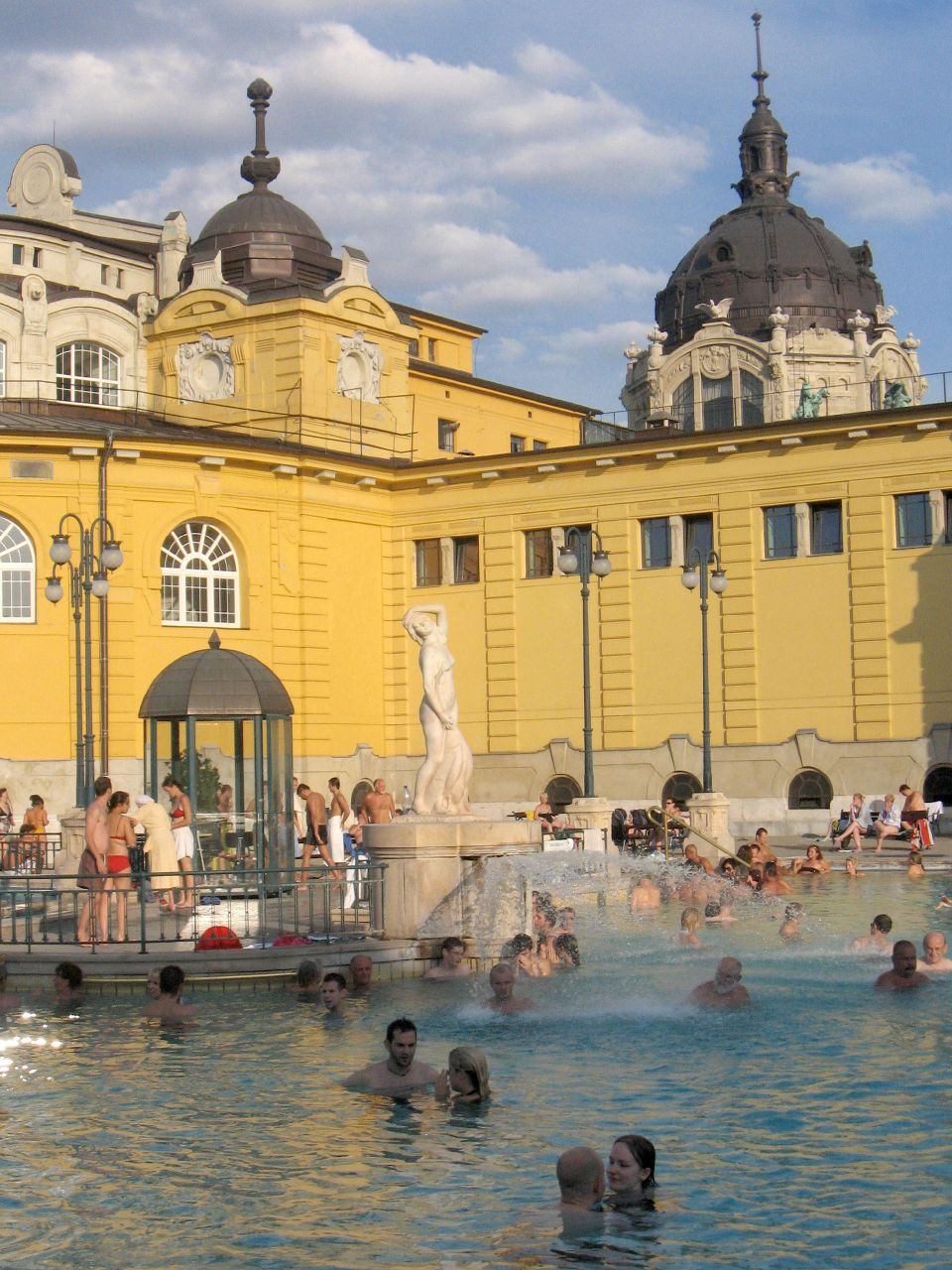
Photo: Guillaume Baviere via Wikimedia Commons, CC BY 2.0
.jpg)
At a Glance
- Szechenyi sits inside City Park, making it easy to combine with a half-day of sightseeing in that area.
- The complex splits into a large outdoor pool section and a maze of indoor thermal halls, saunas and steam rooms.
- The outdoor pools stay open year-round, including through winter, which is part of what makes Szechenyi distinct from smaller baths.
- The outdoor chess tables are a genuine, decades-old local tradition, not a staged photo opportunity.
- Szechenyi is the most visited bath in the city, so arriving earlier in the day generally means shorter lines and calmer pools.
- Evening bath-party events run on their own separate schedule from daytime bathing and are worth confirming independently before booking.
In this guide
- Why Szechenyi Is Budapest's Most Recognizable Bath
- Inside the Building: Indoor Pools, Saunas and Steam Rooms
- The Outdoor Pool Complex and the Chess-Playing Tradition
- Getting to Szechenyi and What's Nearby
- Planning Your Visit: Tickets, Cabins and Lockers
- Best Time of Day to Visit
- Evening Bath-Party Events: What to Know Before Booking
Szechenyi is the bath most visitors picture when they think of Budapest, and for good reason: it's the largest bathing complex in the city, the easiest to reach, and the one with the most recognizable architecture. That popularity is also its main trade-off — Szechenyi can feel considerably busier than the other baths, and a visit here rewards a bit of planning around timing and layout. This guide focuses specifically on Szechenyi itself: how the complex is organized, what the outdoor and indoor sections each offer, and how to build a visit around it. If you haven't yet settled on Szechenyi as your pick, the broader overview of Budapest's thermal baths for first-time visitors is a useful starting point before committing to a specific one.
Why Szechenyi Is Budapest's Most Recognizable Bath
Opened in the early 1910s, Szechenyi was built as a grand, neo-baroque bathing palace at a scale that few cities attempted. Its yellow-toned façade and symmetrical courtyards were designed to be impressive from the outside as well as functional inside, and that dual purpose is a big part of why it photographs so well. It draws on naturally occurring hot springs found while drilling a well in City Park in the late 1800s, which is also why the bath ended up located where it is rather than closer to the Danube like several of the older bathhouses.
Inside the Building: Indoor Pools, Saunas and Steam Rooms
Beyond the outdoor pools that most photos show, Szechenyi contains an extensive indoor section with a series of smaller thermal pools at varying temperatures, along with saunas and steam rooms. These indoor halls tend to be quieter than the outdoor courtyard, with an older, more traditional bathing atmosphere — ornate tiling, domed ceilings, and a slower pace. If the outdoor pools are the part people come to photograph, the indoor halls are often the part that makes a visit feel genuinely restorative rather than just scenic.
The Outdoor Pool Complex and the Chess-Playing Tradition
The outdoor courtyard holds several large pools at different temperatures, from a cooler pool suited to actual swimming to warmer thermal pools meant for soaking rather than laps. One of the most enduring images associated with Szechenyi is the sight of bathers playing chess on floating boards at the edge of one of the outdoor pools — a genuine, long-running local pastime rather than something arranged for visitors. Expect the outdoor area to be the busiest part of the complex, especially around midday.
| Area | Setting | Typical Vibe |
|---|---|---|
| Outdoor thermal pools | Open-air courtyard | Social, busiest, best for photos and the chess tables |
| Outdoor swimming pool | Open-air courtyard | Cooler water, more active, built for actual laps |
| Indoor thermal halls | Domed, tiled interior rooms | Quieter, slower-paced, more traditional |
| Saunas and steam rooms | Indoor | Short, intense heat sessions between pool visits |
Getting to Szechenyi and What's Nearby
Szechenyi sits at the edge of City Park, directly accessible by metro, which makes it one of the easier baths to reach without a car or taxi — see the guide to Budapest public transportation for how the metro and ticketing system works generally. Because of the location, it pairs naturally with a visit to the surrounding park; the Heroes' Square and City Park guide covers what else is worth seeing within easy walking distance, including the square itself, the zoo, and the castle-style museum building across the lake.
Planning Your Visit: Tickets, Cabins and Lockers
On arrival, you'll choose between a shared locker and a private changing cabin, which affects both your entry cost tier and how much privacy you get while changing. Both options come with a wristband or chip that tracks your locker and any extras you add once inside, such as towel rental or a treatment. Specific current ticket categories and pricing change periodically, so confirm them on the official site shortly before you go rather than planning around older figures. The bath etiquette and packing guide goes through exactly what to bring so you're not improvising at the locker-room door.
Best Time of Day to Visit
Early morning tends to be the calmest window, before tour groups and day-trippers arrive in volume, while midafternoon is typically the busiest stretch. If your schedule is flexible, visiting on a weekday rather than a weekend day also tends to thin out the crowds noticeably, particularly in the outdoor pools where space is more limited than in the sprawling indoor section.
Evening Bath-Party Events: What to Know Before Booking
Szechenyi is also known for ticketed evening events that transform parts of the bath into a nighttime party atmosphere with music and lighting, run separately from standard daytime admission. These events operate on their own calendar, aren't guaranteed to run on any given night, and are a different experience entirely from a normal daytime soak — if that's what you're after, confirm the current schedule and ticketing directly rather than assuming it lines up with your travel dates.
Common Mistakes to Avoid
- Showing up at peak midday hours on a weekend and being surprised by how crowded the outdoor pools are.
- Assuming the evening bath-party events run every night, when they operate on a separate and limited schedule.
- Spending the entire visit in the outdoor pools and skipping the quieter indoor thermal halls, which many visitors end up preferring.
- Not budgeting extra time to find your way around a complex this large on a first visit.
- Packing for a summer visit only, when the outdoor pools are also a strong option in cold weather.
Frequently Asked Questions
Is Szechenyi open year-round?
Yes, both the indoor and outdoor sections generally operate throughout the year, which is part of what sets Szechenyi apart from some smaller baths. See the dedicated guide on visiting the baths in winter for what a cold-weather visit actually involves.
Can I visit the outdoor pools in winter?
Yes, the outdoor pools are a genuine winter draw, with steam rising off the hot water in cold air creating a striking, different atmosphere than a summer visit. Dress for the transition between the locker room and the pool, which is covered in the etiquette and packing guide.
Do I need to book tickets ahead of time?
Advance booking isn't always required for standard daytime entry, but it can reduce wait time and is worth doing if you're visiting during a peak period. Evening bath-party events are a different story and typically do require advance tickets.
What is the chess pool everyone talks about?
It's one of the outdoor thermal pools where bathers play chess on floating boards along the edge, a long-standing local habit rather than an attraction set up for tourists. You're welcome to watch, and sometimes to play, but it's genuinely just how some regulars spend their afternoon.
Is Szechenyi good for a family visit?
Generally yes — the scale of the complex and the presence of shallower pools make it more family-friendly in practice than some of the smaller, more historic baths. Confirm any current age or depth restrictions directly, since these can vary by pool.
How do the evening bath parties differ from a normal visit?
They involve music, lighting and a nightlife-style atmosphere layered onto part of the complex, ticketed separately from daytime entry, and they run on a limited schedule rather than nightly. If you want the quieter, traditional bathing experience, a daytime visit is the better fit.