Getting Around
Budapest Airport to the City Center: Every Practical Option
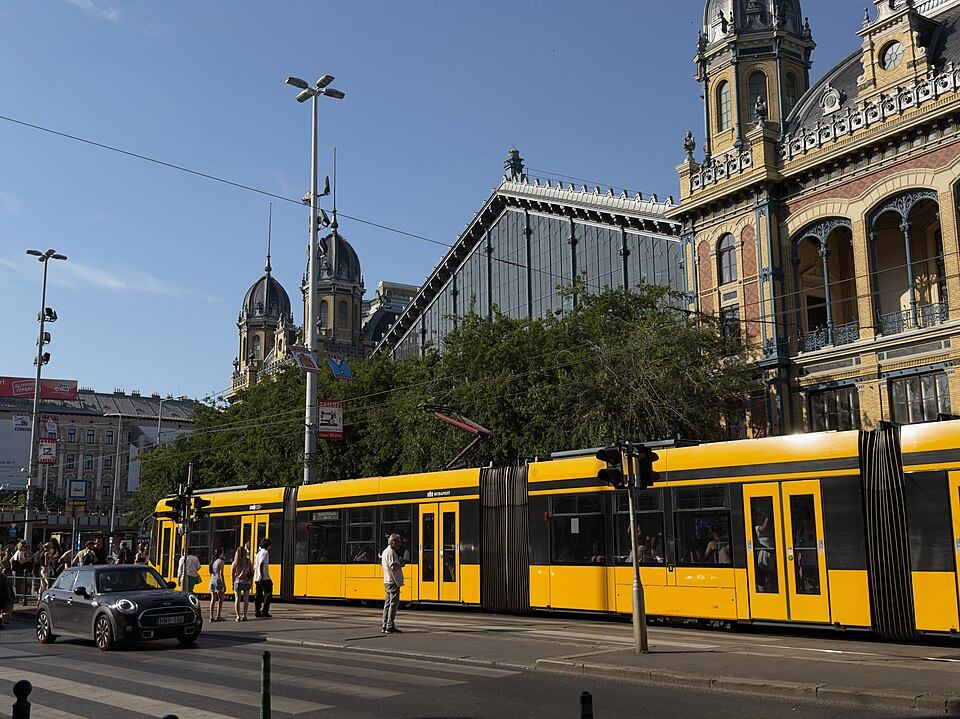
Photo: Mike is Michi via Wikimedia Commons, CC BY-SA 4.0

At a Glance
- Budapest Ferenc Liszt International Airport (BUD) sits roughly 16 miles southeast of downtown Pest.
- The 100E dedicated shuttle bus runs directly to central Pest and takes around 30-40 minutes.
- Regular public buses connect to the metro network for the lowest-cost option.
- Official airport taxis use a fixed-zone pricing system rather than a running meter.
- Pre-booked shared and private transfers can be arranged online before you land.
- Ride-hailing apps operate at the airport, but check current pickup rules before you rely on one.
In this guide
- The 100E Airport Shuttle Bus
- Taking Regular Public Transit From the Airport
- Official Taxis at the Airport
- Pre-Booked Private and Shared Transfers
- Ride-Hailing Apps and Their Limitations
- Pick Your Route by Where You Are Sleeping
- Tickets, Validation and Arrival Backups
- Comparing Your Options
- What to Decide Before You Land
- Returning to the Airport for Your Flight Home
Landing at Budapest Ferenc Liszt International Airport after a long transatlantic flight, the last thing most travelers want is to puzzle over transportation logistics. The good news is that the trip into the city is straightforward once you know the handful of options available, and none of them require advance Hungarian-language skills. This guide breaks down each method so you can choose based on your budget, luggage, arrival time, and tolerance for figuring things out on the fly.
The airport, often referred to by its code BUD, has two active terminals and sits well outside the city core, so there is no walking option and no direct rail line straight into downtown. Every traveler is choosing between some combination of bus, taxi, or private transfer, each with tradeoffs in cost, convenience, and flexibility. Before your trip, it is worth reviewing the broader Budapest public transportation guide so the airport leg fits into a system you already understand, and worth adding to your Budapest travel planning checklist so it isn't an afterthought the night before you fly.
The 100E Airport Shuttle Bus
The most purpose-built option is the 100E, a dedicated express bus operated by BKK that runs between the airport terminals and central Pest, with stops near Deak Ferenc ter, a major hub for metro lines. It is designed specifically for airport travelers, so it skips many of the local stops a regular city bus would make, and it has space intended for luggage. Journey time typically runs somewhere in the neighborhood of half an hour to forty minutes depending on traffic and your exact drop-off point.
Tickets for the 100E must be purchased specifically for that line rather than using a standard single-fare transit ticket, and the current price and purchase process (via the BudapestGO app, at airport kiosks, or from on-site counters) should always be confirmed on the official BKK website before you travel, since fares and procedures are updated periodically.
Taking Regular Public Transit From the Airport
Budget-conscious travelers who don't mind one extra transfer can use the standard public bus network instead of the 100E. A regular bus line connects the airport to a nearby metro station, from which the M3 (blue) metro line runs into the city center. This route uses standard BKK fares, the same tickets or passes you'd use for any city bus or metro ride, which makes it noticeably cheaper than the dedicated shuttle, though it takes longer overall and involves navigating at least one change with your luggage. If you plan to rely on public transit throughout your stay, picking up a multi-day travel pass at the airport can simplify both this ride and everything that follows.
Official Taxis at the Airport
Only taxis affiliated with the airport's official taxi service are permitted to pick up passengers directly from the terminal taxi stands, and this system uses a fixed-zone fare structure rather than a traditional meter that runs during the ride. That means your approximate cost is determined by which zone your destination falls into, which the dispatcher at the taxi stand can tell you before you get in. Avoid drivers who approach you inside the terminal offering a ride outside the official queue; use the marked taxi stand instead. As with every fare mentioned in this guide, treat specific dollar or forint amounts you see online as approximate and confirm current rates with the taxi desk or official airport signage at the time of travel.
Pre-Booked Private and Shared Transfers
A private or shared transfer, booked online in advance through a transfer company, picks you up by name at arrivals and takes you directly to your hotel or apartment, no transfers or queuing required. This tends to be a moderate-to-higher-cost option compared with public transit but is often similar to or less than an official taxi for a private car, and it has the advantage of a fixed, known price arranged before you land. Shared transfers, where you ride with other travelers heading in a similar direction, cost less than a private car but may involve extra stops.
Ride-Hailing Apps and Their Limitations
Ride-hailing services do operate in Budapest and at the airport, but pickup rules for app-based rides at airport terminals can change, including designated pickup zones that differ from where a taxi queues. If you plan to use a ride-hailing app, check the app itself for current airport pickup instructions rather than assuming it works the same way it does at airports back home.
Pick Your Route by Where You Are Sleeping
The cheapest option on paper is not always the easiest, because the last mile depends on your hotel. Start from the address, then choose the leg that gets you closest to a metro or tram stop.
| Where you are staying | Good default | Why |
|---|---|---|
| Central Pest near Deák Ferenc Square, the Basilica, or Váci Street | 100E to Deák Ferenc Square | One vehicle, then a short walk or one metro stop |
| Kálvin Square, Ráday Street, or the Great Market Hall area | 100E toward the inner city, or bus 200E plus the M3 | The M3 stops at Kálvin Square, so the metro route is direct once you reach it |
| Near Nyugati station, Lehel Square, or Újlipótváros | Bus 200E to Kőbánya-Kispest, then the M3 | The blue line runs straight through that side of Pest |
| Buda riverside (Víziváros) | 100E to Deák Ferenc Square, then the M2 to Batthyány Square | The red line crosses under the river in a few stops |
| Gellért Hill or Újbuda | 100E toward Kálvin Square, then the M4 across the river | The green line reaches Gellért Square without a surface transfer |
| Late-night or very early arrival | Official taxi or a pre-booked transfer | Daytime bus frequency drops, and a night service requires a separate check |
If your group is three or four people, a taxi or transfer often becomes the practical choice even when it is not the cheapest, because splitting one fare removes the luggage-on-the-metro problem. For two travelers with carry-on bags, the 100E is usually the cleanest compromise. For one traveler on a tight budget who does not mind stairs, the bus-and-metro route works well, but several stations on the way involve steps and escalators, so verify lift access if your bags are heavy. Our accessibility guide covers what to check.
Tickets, Validation and Arrival Backups
Budapest's transit tickets do not work like a tap-and-go card. A standard single ticket covers one ride on one line with no transfers, so a bus-plus-metro journey needs two tickets, a travel pass, or a product that explicitly covers both. Paper tickets must be validated in the small machines on buses, trams, and at metro entrances before you ride. Tickets bought in the BudapestGO app are activated in the app, and you show the screen if an inspector asks. Inspectors can board at any time and check up to the moment you leave the vehicle or station, so keep the ticket accessible until you are fully outside the system. The 100E has its own product, so do not assume a validated city ticket or pass is automatically accepted. Check the current rules on the BKK site before you fly.
Quick Arrival Routine
- Clear passport control and baggage claim in Terminal 2A or 2B, the two parts of the main terminal for Schengen and non-Schengen flights.
- Before leaving the hall, decide on one option and one backup. Connect to airport Wi-Fi only long enough to download your tickets, then switch to offline maps.
- If you take a taxi, use the official stand, ask the dispatcher for the zone fare before you load your luggage, and ask for a receipt, which is called a nyugta in Hungarian.
- If you take the bus, find the stop signs for your line and confirm the direction before boarding. Buses toward the city are labeled with their destination on the front display.
- On arrival, enter your accommodation address into a maps app before you leave the vehicle, so you are not looking for it on a crowded square.
If Your Flight Lands Late or Runs Behind
After midnight the city switches to night service, which has different routes and a different rhythm from daytime. If your arrival time is uncertain, a taxi or a transfer company that tracks your flight number is the safest answer. Many transfer providers adjust pickup time to delays, but confirm that policy in writing when you book. For the return trip, build in more buffer than the airline minimum if you are taking public transit, since a delayed bus or a connecting metro cannot be made up in the terminal. The public transportation guide explains the network you will use for both ends of the trip.
Comparing Your Options
| Method | Approx. Travel Time | Relative Cost | Best For |
|---|---|---|---|
| 100E shuttle bus | 30-40 min | Budget to moderate | Solo travelers, light luggage, central Pest hotels |
| Public bus + metro | 45-60+ min | Lowest cost | Budget travelers already using a transit pass |
| Official airport taxi | 25-40 min | Higher cost | Groups, heavy luggage, late-night arrivals |
| Pre-booked private transfer | 25-40 min | Moderate to higher | Families, early flights, predictable pricing |
| Ride-hailing app | 25-40 min | Varies | Travelers comfortable navigating app pickup rules |
What to Decide Before You Land
A few decisions are easier to make before you touch down than while standing in a crowded arrivals hall with jet lag setting in. Consider the following checklist.
- Decide whether you want a fixed, pre-arranged price (transfer or taxi with confirmed zone fare) or a flexible, pay-as-you-go option (bus).
- Check how many pieces of luggage your group has; a packed bus aisle is less comfortable with large suitcases.
- Note your arrival time. Very early morning or late-night arrivals may have reduced shuttle frequency, which favors a taxi or transfer.
- If you're staying in Buda rather than central Pest, confirm whether your chosen method drops you close enough, or whether you'll need a connecting tram or bus; see our guide to where to stay in Budapest for context.
- Download the BudapestGO app ahead of time if you intend to use public transit, since it's the primary tool for buying and validating tickets digitally.
Returning to the Airport for Your Flight Home
Every option above works in reverse for your departure, but build in extra buffer time for an early flight, since overnight transit frequency is reduced and traffic patterns near the airport can vary. If your return flight is very early, a pre-booked transfer or taxi removes the uncertainty of waiting for a bus that may run less frequently before dawn.
Common Mistakes to Avoid
- Getting into an unofficial taxi offered inside the terminal instead of using the marked official taxi stand, which can lead to inflated, unregulated fares.
- Assuming the 100E shuttle uses the same ticket as the regular public bus and metro; it has its own fare that must be purchased separately.
- Not accounting for a connecting tram or bus after the shuttle drop-off if your hotel is in Buda rather than central Pest.
- Waiting to download the BudapestGO app until after landing, when airport Wi-Fi or data setup may slow things down.
- Underestimating travel time for an early departure flight, when transit frequency to the airport is reduced overnight.
Frequently Asked Questions
Is there a train directly from Budapest Airport to the city center?
No direct rail line currently connects the airport terminals to downtown Budapest. Travelers use the 100E shuttle bus, regular public bus plus metro, taxi, or a pre-booked transfer instead.
How far in advance should I book an airport transfer?
Booking a day or two ahead is usually enough for a standard arrival, but booking further in advance is wise during peak season or if you're arriving on a holiday weekend when demand is higher.
Can I pay for the 100E bus with cash?
Payment methods and whether cash is accepted can change, so check the official BKK website or the BudapestGO app for current purchase options before you travel.
Is the airport taxi service safe for solo travelers?
The official airport taxi service operating from the marked stand is a regulated option. Solo travelers, especially those arriving at night, often prefer it or a pre-booked transfer over navigating public transit with luggage.
Which terminal will I arrive at?
Budapest Airport has two active terminals; check your airline's confirmation and the official airport website, bud.hu, for your specific terminal and current transfer logistics between them if needed.
Which route is best if I am staying in Buda?
Take the 100E to Deák Ferenc Square and change to the M2 for Batthyány Square, or ride on to Kálvin Square for the M4 toward Gellért Square. A pre-booked transfer straight to the door is simpler if your hotel sits on a steep street or you have heavy bags.
Can I use one ticket for the bus and the metro?
Not with a standard single ticket, which covers one ride on one line with no transfers. A travel pass, or a product marked as valid for both legs, solves this. Always validate paper tickets or activate app tickets before you ride, and check BKK's current rules because products change.