Landmarks & History
Heroes' Square and City Park: A Half-Day Guide
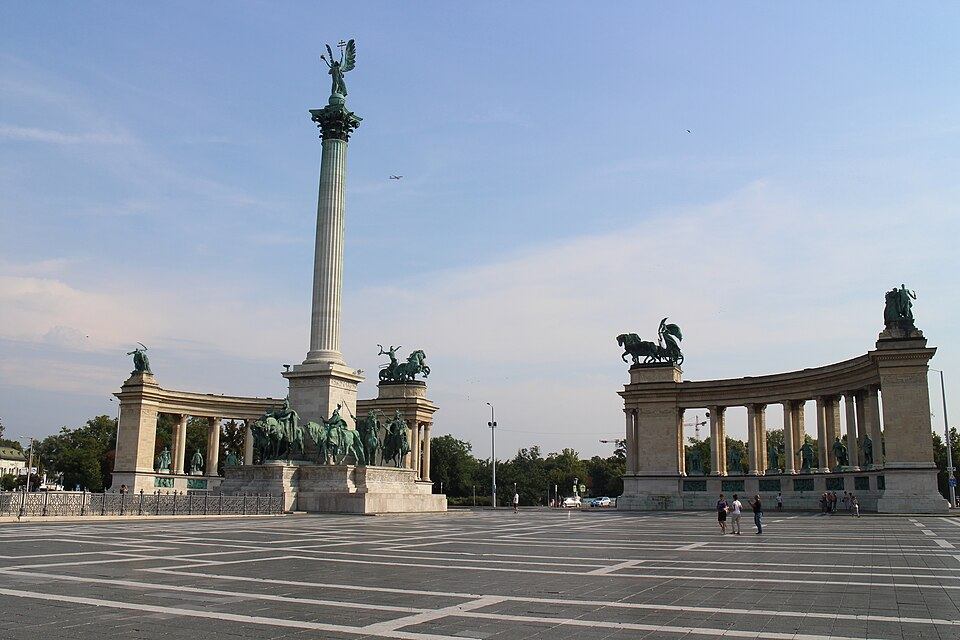
Photo: Suicasmo via Wikimedia Commons, CC BY-SA 4.0
_20180824.jpg)
At a Glance
- Heroes' Square sits at the end of Andrassy Avenue, reachable on the M1 metro — continental Europe's oldest underground line.
- Two major museums flank the square itself: the Museum of Fine Arts and the Kunsthalle exhibition hall.
- City Park behind the square holds a replica castle, a zoo, a boating lake, and Szechenyi Thermal Bath.
- The lake becomes an ice rink in winter and a rowboat spot in warmer months — the same water, two different seasons.
- Vajdahunyad Castle isn't a historic fortress — it's a deliberately eclectic replica built to showcase architectural styles.
- Plan at least half a day if you want the square, the park, and a bath stop in the same visit.
In this guide
- What Heroes' Square Actually Commemorates
- The Museums Flanking the Square
- Vajdahunyad Castle: A Replica Building With Its Own Story
- City Park's Lake: Boating in Summer, Skating in Winter
- Where Szechenyi Thermal Bath Fits Into the Park
- The Zoo and Other Family-Friendly Stops
- How to Get Here and How Much Time to Plan
Heroes' Square and the City Park behind it make up one of Budapest's few spots where a monument, a cluster of museums, a zoo, a thermal bath, and a boating lake all sit within a few minutes' walk of each other. That range is exactly why it's easy to underplan this stop — travelers budget time for "the square" and don't realize how much sits just behind it. This guide breaks down what's actually here and how to spend a half-day without missing the parts worth the walk.
What Heroes' Square Actually Commemorates
The square's centerpiece is the Millennium Monument, built around the same wave of national commemoration as several other landmarks in the city, including the dome symbolism covered in this site's Hungarian Parliament guide. A tall central column topped by a statue of the Archangel Gabriel stands above statues of Hungarian chieftains and later historical leaders arranged in a sweeping colonnade. It's one of the more overtly symbolic public spaces in the city, built to put a visual timeline of national history on permanent display.
The Museums Flanking the Square
Two major buildings sit on either side of the square: the Museum of Fine Arts, with an international collection spanning multiple centuries, and the Kunsthalle (Mucsarnok), which hosts rotating contemporary exhibitions rather than a permanent collection. Neither museum is required to appreciate the square itself, but both are worth factoring in if your trip includes a broader museum day — this site's guide to choosing among Budapest's museums covers how these compare to other collections across town.
Vajdahunyad Castle: A Replica Building With Its Own Story
Walk a few minutes into the park and you'll reach what looks like a genuine medieval castle, complete with towers and a drawbridge. It isn't one. Vajdahunyad Castle was built around the same national-commemoration period as the square, deliberately combining architectural styles from different regions and eras of Hungarian history into a single eclectic building, originally meant as a temporary exhibition piece before it was rebuilt in more permanent materials. A statue of Anonymus, a medieval chronicler whose identity remains unknown, sits near the building and draws its own steady stream of photographs.
City Park's Lake: Boating in Summer, Skating in Winter
The lake in front of the castle shifts with the seasons: rowboats and pedal boats in the warmer months, and an outdoor ice rink once temperatures drop, a seasonal swing worth checking against the season of your own trip before you plan around the lake specifically. Either version makes for a pleasant break in the middle of a park walk, and the castle reflection on the water is one of the more photogenic angles in this part of the city.
Where Szechenyi Thermal Bath Fits Into the Park
City Park is also home to Szechenyi Thermal Bath, one of the largest bathing complexes in Europe and a destination in its own right rather than a quick add-on. This site's complete Szechenyi planning guide covers tickets, what to bring, and how to set aside proper time for it — treat a bath visit as its own block of the day, not something you squeeze in between the castle and the zoo.
The Zoo and Other Family-Friendly Stops
Budapest Zoo and Botanical Garden sits at the park's edge, along with a historic circus and an amusement-park-style area nearby, making this stretch of the city one of the more family-friendly half-days on offer. None of these require advance planning beyond checking current hours, but they do add up quickly if you're trying to combine several in one afternoon with younger kids in tow.
| Stop | Type | Rough time needed |
|---|---|---|
| Heroes' Square and monument | Free, outdoor | 15–20 minutes |
| Museum of Fine Arts or Kunsthalle | Ticketed museum | 1–2 hours |
| Vajdahunyad Castle and lake | Free, outdoor | 30–45 minutes |
| Szechenyi Thermal Bath | Ticketed, separate visit | Half a day on its own |
| Zoo and Botanical Garden | Ticketed | 2–3 hours |
How to Get Here and How Much Time to Plan
The M1 metro line runs directly to Heroes' Square and is itself a point of interest — it's the oldest underground railway line in continental Europe, with a noticeably different feel from the newer lines. This site's public transportation guide covers how the M1 fits into the wider system if you're coming from elsewhere in the city. Travelers pairing this stop with the other side of the river can read this site's Buda Castle guide for the counterpart landmark district across the Danube. Without a bath stop, the square and the park can realistically fill a relaxed half-day; add Szechenyi and you're looking at a full day built around this one stretch of the city.
Common Mistakes to Avoid
- Budgeting time only for the square itself and not realizing how much of City Park sits just behind it.
- Assuming Vajdahunyad Castle is a genuine historic fortress rather than a later, deliberately eclectic replica built for a national exhibition.
- Trying to fit Szechenyi Thermal Bath into the same afternoon as the museums and the zoo without treating it as its own half-day block.
- Skipping the M1 metro experience itself, not realizing it's one of the oldest underground lines of its kind in the world.
- Visiting the lake expecting the same activity year-round, when boating and ice skating are strictly seasonal and don't overlap.
Frequently Asked Questions
How much time should I set aside for Heroes' Square and City Park?
A relaxed half-day covers the square, a walk around Vajdahunyad Castle and the lake, and maybe one museum. Adding Szechenyi Thermal Bath turns it into a full day built around this part of the city.
Is Vajdahunyad Castle a real historic building?
Not in the traditional sense. It was built as a deliberately eclectic showcase of architectural styles from different eras and regions, originally intended as a temporary exhibition piece before being rebuilt to last.
Can I visit Szechenyi Thermal Bath the same day as the square?
Yes, since it sits inside City Park itself, but treat it as a separate, substantial block of time rather than a quick stop alongside the museums and the zoo.
What's the best way to get to Heroes' Square?
The M1 metro line runs directly there and is worth noting in itself — it's one of the oldest underground railway lines in continental Europe.
Is the park walkable with kids?
Generally yes. The paths are level and paved, and the area combines a zoo, a lake, and open green space in a way that tends to work well for families.