Landmarks & History
Buda Castle Guide: History, Museums and Viewpoints
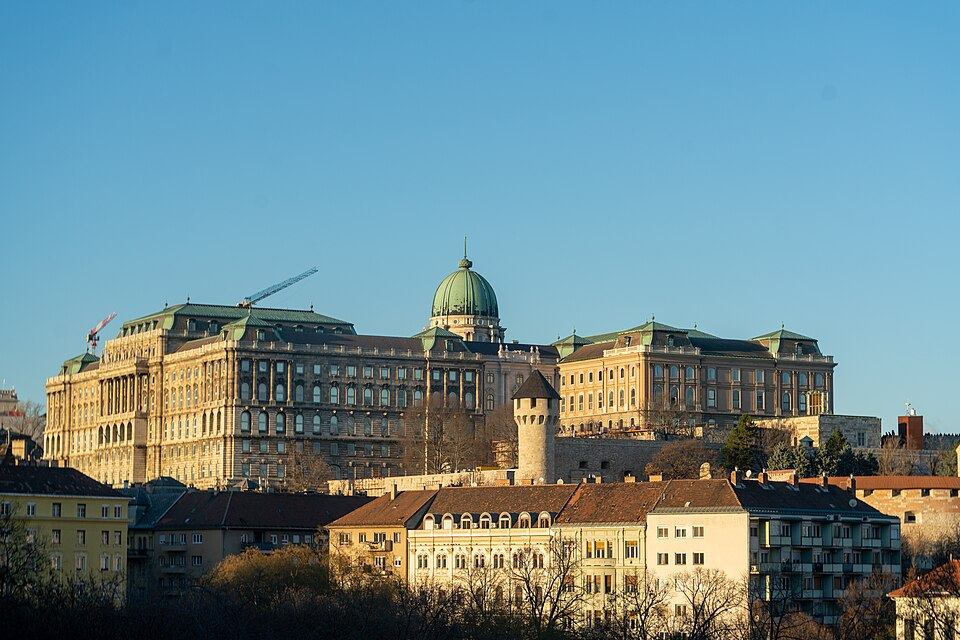
Photo: Paul Colin Hennig (firstdorsal.eu) via Wikimedia Commons, CC BY-SA 4.0
_from_across_the_Danube,_Budapest_(2025).jpg)
At a Glance
- "Buda Castle" usually means the palace complex itself, not the whole hilltop neighborhood around it.
- The palace holds the Hungarian National Gallery, the Budapest History Museum and the National Library under one roof.
- The Castle Hill Funicular from Clark Adam Square is the classic way up, but it isn't the only one.
- Much of today's palace is a postwar reconstruction — the Siege of Budapest left the original badly damaged.
- The riverside ramparts give some of the city's best unobstructed views toward Parliament and Pest.
- Pair a palace visit with the rest of Castle Hill — the museums alone rarely fill a full day.
In this guide
Buda Castle is the palace complex crowning Castle Hill on the west bank of the Danube, and it's easy to confuse with the broader hilltop neighborhood that surrounds it. The palace itself holds several of Budapest's major museums, a series of courtyards and terraces built for sweeping river views, and a layered history that runs from medieval fortress to wartime ruin to the reconstructed building standing today. This guide separates what's actually inside the palace from what's elsewhere on the hill, and lays out how to plan a visit that doesn't turn into a confused walk around the outer walls.
What "Buda Castle" Actually Refers To
Strictly, Buda Castle is the former royal palace building itself — the long, domed structure at the southern end of Castle Hill. The surrounding streets, churches, and viewpoints, including the area covered in this site's Castle District guide, make up a separate (if adjoining) historic neighborhood. Knowing the difference matters when you're reading opening information or ticket categories online, since a page about "Castle District" attractions and a page about the palace's own museums aren't always describing the same thing.
A Short History of the Hill
A royal residence has stood on this site in some form since the 13th century, when fortification work followed the Mongol invasions. The palace was rebuilt and expanded repeatedly over the centuries, damaged during the Ottoman era, and then reconstructed on a grand Baroque scale under Habsburg rule. The building most visitors picture — with its dome and long symmetrical wings — dates largely from that 18th- and 19th-century expansion. It suffered severe damage during the Siege of Budapest near the end of the Second World War, and the postwar reconstruction that followed deliberately simplified some of the original, more ornate detailing.
The Museums Inside the Palace Walls
Three institutions share the building today, and they're genuinely different in focus, so it's worth picking rather than assuming one covers everything. For a broader sense of how these compare to the rest of the city's collections, see this site's guide to choosing among Budapest's museums.
| Institution | Focus | Who it suits |
|---|---|---|
| Hungarian National Gallery | Hungarian fine art from the medieval period to the 20th century | Art-focused travelers, those with an afternoon to spend indoors |
| Budapest History Museum (Castle Museum) | The city's history, including excavated medieval palace halls | History-focused visitors, anyone curious about what's literally beneath the palace |
| National Szechenyi Library | Hungary's national research library and rare collections | Researchers more than casual sightseers |
Getting Up the Hill: Funicular and Other Routes
The Castle Hill Funicular (Budavári Sikló), with its small yellow carriages, climbs from Clark Adam Square near the Chain Bridge up to the palace courtyard and is the most scenic short ride in the city, though lines build quickly once tour buses arrive. Local buses also serve the hill, and it's entirely walkable from several directions if you don't mind a sustained uphill stretch — this site's guide to walking and cycling in Budapest has more on routes and gradient. Many visitors arrive instead from the north, walking down from Fisherman's Bastion and Matthias Church along the hill's spine.
Courtyards, Walls and the Views Worth Seeking Out
Even without a museum ticket, the palace grounds are worth the climb. The Lion Courtyard and the terraces along the Danube-facing ramparts open onto one of the city's best unobstructed views, taking in the river, the chain of bridges, and the Parliament building across the water in Pest. Early morning or just before sunset tends to mean noticeably fewer people competing for the same railing.
How Much Time to Set Aside
A walk through the courtyards and along the ramparts, without entering any museum, can be done in well under an hour. Add one museum and that stretches to a half-day; add two and it's a realistic full-day stop on its own. Travelers working with a single day in the city should read this site's one-day Budapest itinerary before committing a whole morning here, since Castle Hill competes with several other major landmarks for the same hours.
Pairing Buda Castle With the Rest of Castle Hill
The palace is only one piece of a hill that also holds Fisherman's Bastion and Matthias Church at its northern end, along with quieter residential streets, embassies, and smaller museums in between. Treating the palace as a stand-alone stop rather than part of that longer walk is the most common planning mistake — budget time for the whole hill, not just the building with the dome.
Common Mistakes to Avoid
- Assuming "Buda Castle" and "Castle District" mean the same stretch of attractions — the palace is one building within a much larger hilltop neighborhood.
- Picking a single museum ticket without checking what it actually covers first, then being surprised a different collection isn't included.
- Lining up for the funicular during the busiest midday hours instead of walking up or arriving earlier, when the wait is far shorter.
- Budgeting only an hour for "Buda Castle" when the plan actually includes a museum visit, which routinely takes much longer than the walk-through alone.
- Skipping the ramparts and courtyards entirely because there's no museum ticket that day — the view itself doesn't require one.
Frequently Asked Questions
Is Buda Castle the same as the Castle District?
Not exactly. Buda Castle usually refers to the palace building itself, while the Castle District is the wider historic neighborhood around it, including Fisherman's Bastion and Matthias Church farther north on the hill.
Which museum inside the palace is worth prioritizing?
It depends on your interests: the Hungarian National Gallery suits art-focused travelers, while the Budapest History Museum appeals more to anyone curious about the city's medieval and Ottoman-era past, including excavated halls beneath the current building.
Is the current palace building original?
Only in part. The structure was rebuilt repeatedly over the centuries and suffered severe damage in the Second World War, so much of what stands today reflects a simplified postwar reconstruction rather than the most ornate historic version.
What's the easiest way up the hill?
The Castle Hill Funicular from Clark Adam Square is the classic option, though it draws long lines in peak season. Walking up from several directions, or arriving via bus, are both realistic alternatives.
Do I need to book museum tickets in advance?
It isn't always required, but booking ahead can save time during busy periods. Check each museum's own site close to your visit date for current ticketing practice.