Day Trips & Seasons
Budapest to Szentendre: Independent Day-Trip Guide
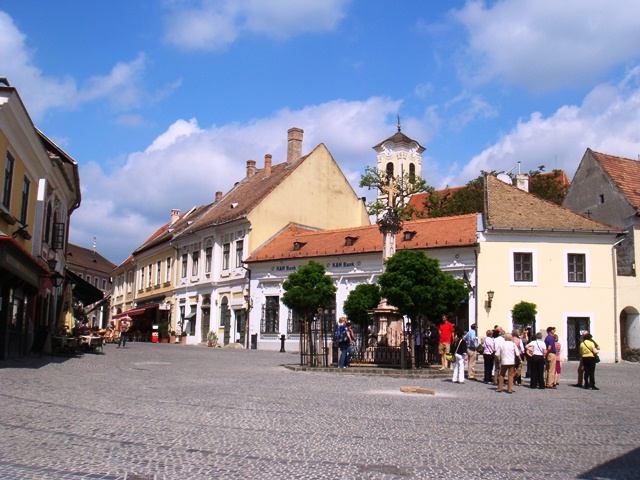
Photo: (WT-shared) Shoestring via Wikimedia Commons, CC BY-SA 4.0

At a Glance
- Szentendre sits roughly 12 miles north of Budapest, directly on the Danube's right bank.
- The HEV suburban train from Batthyany ter is the simplest way to get there, taking about 40 minutes.
- Seasonal river boats add Danube scenery in warmer months but run far less often than the train.
- A half-day covers the Old Town; add a few more hours if you also want the open-air Skanzen museum.
- Several small museums and some churches cut back hours or close on Mondays.
- Szentendre is Hungary's best-known artist colony, with a Serbian Orthodox history that shaped its architecture and food.
In this guide
- Why Szentendre Makes an Easy Half-Day Escape
- Getting from Budapest to Szentendre: Train, Boat or Tour
- What to See in Szentendre's Old Town
- Visiting the Szentendre Open-Air Museum (Skanzen)
- Where to Eat and What to Bring Home
- How Much Time to Set Aside
- When to Go for the Best Experience
- A Walking Order for Szentendre's Old Town
- Choosing How to Arrive and Return
- Szentendre Compared With Visegrád and Esztergom
Szentendre is the easiest Danube Bend town to reach from Budapest, which is exactly why it has become the default day trip for visitors who want a change of pace without a complicated itinerary. The town sits directly on a suburban rail line, so there is no need for a guided tour, a rental car, or a full day of travel to see cobblestone streets, Serbian Orthodox churches, and a river promenade that looks nothing like downtown Pest.
This guide focuses on Szentendre on its own, as a self-contained half-day or full-day trip. If you would rather combine it with other Danube Bend stops like Visegrad or Esztergom in a single longer day, the Danube Bend day trip guide walks through how to sequence a multi-stop itinerary instead.
Why Szentendre Makes an Easy Half-Day Escape
Compared with Visegrad or Esztergom, Szentendre requires the least logistical planning of any Danube Bend destination. There is no need to time a trip around infrequent regional buses or a single daily express train — a commuter rail line connects central Budapest to the town roughly every twenty to forty minutes depending on the time of day. That frequency means a mistimed departure or a slow lunch does not derail the day, which makes Szentendre a forgiving choice if this is your first solo day trip outside the city.
Getting from Budapest to Szentendre: Train, Boat or Tour
The HEV suburban railway, line H5, is the standard way to reach Szentendre, departing from Batthyany ter station on the Buda side, which is also a metro and tram hub. The ride takes about 40 minutes and runs through Buda's northern suburbs before following the Danube north. A standard Budapest transit pass covers only the portion of the line within city limits, so you will need a supplementary ticket for the stretch beyond the city boundary — ticket machines and staff at Batthyany ter can issue this, and it is worth sorting out before you board rather than guessing. For a broader look at how Budapest's regional rail network fits together, the guide to Budapest's train stations and regional trips covers how HEV lines differ from full intercity trains.
In the warmer months, river boats also run between central Budapest and Szentendre, typically taking longer than the train but adding Danube scenery to the trip. Boat schedules are seasonal and far less frequent than the train, so treat this as a scenic alternative for a leisurely day rather than your primary plan, and confirm current departure times before you commit to it. Organized bus tours are a third option, useful if you would rather not navigate independently, though they typically bundle Szentendre with other Danube Bend stops rather than giving it a full day on its own.
| Option | Typical Travel Time | Cost Tier | Best For |
|---|---|---|---|
| HEV suburban train | About 40 minutes each way | Budget | Independent travelers, frequent departures |
| Seasonal river boat | 1.5 to 2 hours each way | Moderate | Travelers prioritizing scenery over speed |
| Guided bus tour | Varies by itinerary | Higher-cost | Travelers who want narration and no logistics |
What to See in Szentendre's Old Town
Szentendre's Old Town is compact enough to explore on foot in a couple of hours, built around a central square, Fo ter, lined with Baroque merchant houses in a range of pastel colors. The town's history as a refuge for Serbian merchants and craftsmen fleeing Ottoman-controlled territory centuries ago still shows in its Orthodox churches and the Belgrade Cathedral complex tucked behind the main square. Several small museums fill out the town's identity as an artist colony: the Czobel Museum and the ceramics-focused collection connected to sculptor Margit Kovacs are the two most visited, and both reward even a quick stop if you have any interest in 20th-century Hungarian art. Climb toward the hilltop Catholic parish church for the best overview of the town's red rooftops and the Danube beyond.
Visiting the Szentendre Open-Air Museum (Skanzen)
The Hungarian Open-Air Museum, known locally as Skanzen, sits a few miles outside the town center and is a different kind of attraction altogether — a large open-air site where historic rural buildings from across Hungary have been reassembled to show how village life looked before the 20th century reshaped the countryside. It is reachable by local bus from Szentendre's center, and because it is spread across a large wooded site, it takes considerably longer to see properly than the Old Town does. If your day trip is already built around a train schedule back to Budapest, decide early whether Skanzen or a slower walk through town is the priority, since trying to do both thoroughly in one day is the most common way visitors end up rushing.
Where to Eat and What to Bring Home
Szentendre's food scene leans into its Serbian and Mediterranean-influenced history more than Budapest's does, with fish soup, grilled dishes, and lighter wine-bar fare showing up on menus near the river. The town is also known for marzipan — there is a dedicated Marzipan Museum near the main square — and for small galleries and craft shops selling ceramics, folk textiles, and local wine that make better souvenirs than anything mass-produced near Budapest's main tourist strips.
How Much Time to Set Aside
A fast-paced visitor can see the Old Town's highlights in about three to four hours, which is enough to justify the trip even as a half-day add-on to a longer Budapest stay. If you are building a five-day Budapest itinerary or still deciding how many days to spend in the city, Szentendre is one of the easiest half-day trips to slot in without disrupting the rest of your plan, since you can leave after breakfast and be back in central Budapest well before dinner. Travelers who also want Skanzen, a slow lunch, and time to browse galleries should plan on most of a full day instead.
When to Go for the Best Experience
Szentendre is pleasant for most of the year, but weekday mornings are noticeably calmer than summer weekends, when day-trippers and tour buses from Budapest fill the main square. Many of the town's smaller museums and some churches reduce their hours or close entirely on Mondays, a pattern worth checking before you lock in a date. Winter visits are quieter and the Old Town still has plenty of indoor sights, though Skanzen's outdoor exhibits are far more rewarding in the warmer months when the site is fully open.
A Walking Order for Szentendre's Old Town
Szentendre's center is compact, and a fixed route prevents backtracking. Start at the HÉV terminus and walk through the underpass toward the old town, a trip of roughly ten minutes.
- Reach the main square, Fő tér, where the Plague Cross from 1763 stands in the middle and the Serbian Orthodox Blagovestenska Church, built in 1752, sits at one side.
- Walk the lanes off the square for galleries, craft shops and the marzipan museum.
- Visit the Czóbel Museum or the Kovács Margit ceramics museum if you want art; Szentendre has had an artists' colony since the 1920s.
- Climb Templomdomb, the church hill, for rooftop and Danube views.
- Finish on the river promenade (Dunakorzó) for a break before returning.
The town's character comes from Serbian settlers who arrived in the late 17th century, which explains the Orthodox churches and the Mediterranean-style streets. Allow two to three hours for the old town on its own, and treat the open-air museum as a separate half-day, as covered in the section above.
Choosing How to Arrive and Return
| Option | Strengths | Trade-offs |
|---|---|---|
| HÉV suburban railway (H5) | Departs from Batthyány tér, needs no reservation, runs frequently | Not a scenic trip; you need a ticket that covers the suburban section beyond the city line. |
| River boat (seasonal) | Scenic arrival from central Pest | Slower, seasonal and subject to schedule and water levels. |
| Bus or organized tour | Convenient with fixed pickup | Less flexibility and fewer hours in town. |
A good compromise is to take the boat out in the morning and the HÉV back in the evening, which gives you the river view without committing to a slow return. Check current schedules and ticket coverage with BKK and the official Szentendre site. The HÉV and other regional options are explained in the regional trips guide, and the transit guide covers how city tickets work.
Szentendre Compared With Visegrád and Esztergom
Szentendre is one of three popular Danube Bend towns, and choosing among them depends on what you want to see.
| Town | Main draw | Choose it if |
|---|---|---|
| Szentendre | Cobbled old town, galleries, museums | You want a relaxed walking day close to Budapest. |
| Visegrád | Hilltop citadel and views of the river's bend | You want scenery and a castle visit. |
| Esztergom | Hungary's largest church, the basilica, above the Danube | You want monumental architecture and are willing to travel further. |
For a day that covers more than one stop, see the Danube Bend guide. Szentendre works year-round: in spring and autumn the light is good, in summer the shaded lanes help, and in winter the town has a Christmas-market feel with fewer visitors, though the open-air museum may run a shorter season, so verify before you plan the trip around it.
Common Mistakes to Avoid
- Boarding the HEV with only a standard Budapest transit pass and assuming it covers the whole ride — the pass only covers the in-city segment, and you will need a supplementary ticket for the Szentendre portion.
- Scheduling the trip for a Monday, when several of the town's small museums and some churches cut back hours or close entirely.
- Trying to fit both the Old Town and the Skanzen open-air museum into a short afternoon — the two sights are far enough apart and large enough that rushing both usually means shortchanging one.
- Counting on a river boat as the only way back to Budapest without checking the schedule first, since boat departures are seasonal and far less frequent than the train.
- Treating Szentendre as a full substitute for the rest of the Danube Bend — it is a single town, not the whole region, and travelers hoping to also see Visegrad or Esztergom need a different plan.
Frequently Asked Questions
How long does it take to get from Budapest to Szentendre?
The HEV suburban train from Batthyany ter takes about 40 minutes each way, making Szentendre one of the fastest day trips from central Budapest. Seasonal river boats take considerably longer, usually one and a half to two hours.
Can I use my Budapest public transport pass for the whole trip?
Only partially. Standard Budapest passes cover the in-city portion of the HEV line, but you need a separate supplementary ticket for the section of track beyond the city boundary into Szentendre.
Is one day enough to see Szentendre and the open-air museum?
It's possible but tight. A relaxed visitor who wants both the Old Town and Skanzen should plan on most of a full day; if you only have a half-day, pick one and save the other for a future trip.
Is Szentendre touristy?
Central Fo ter and the main streets near it see steady tourist traffic, especially on summer weekends, but a short walk away the town quiets down considerably, and weekday visits feel far less crowded.
Do I need to book anything in advance?
Generally no. Train tickets are bought at the station on the day, and most museums don't require advance booking, though it's worth checking current hours for any specific site you don't want to miss.
Can I visit the open-air museum and the old town in one day?
It is possible but tight. The museum is on the edge of town and needs several hours, while the old town takes two to three. If time is short, choose one or plan an early start.
Is Szentendre worth visiting in winter?
Yes, for a quiet walk, galleries and café stops, and fewer crowds. Check which museums and outdoor sites are open in the cold months before you go.