Culture & Nightlife
Budapest Ruin Bars: History, Etiquette and What to Expect
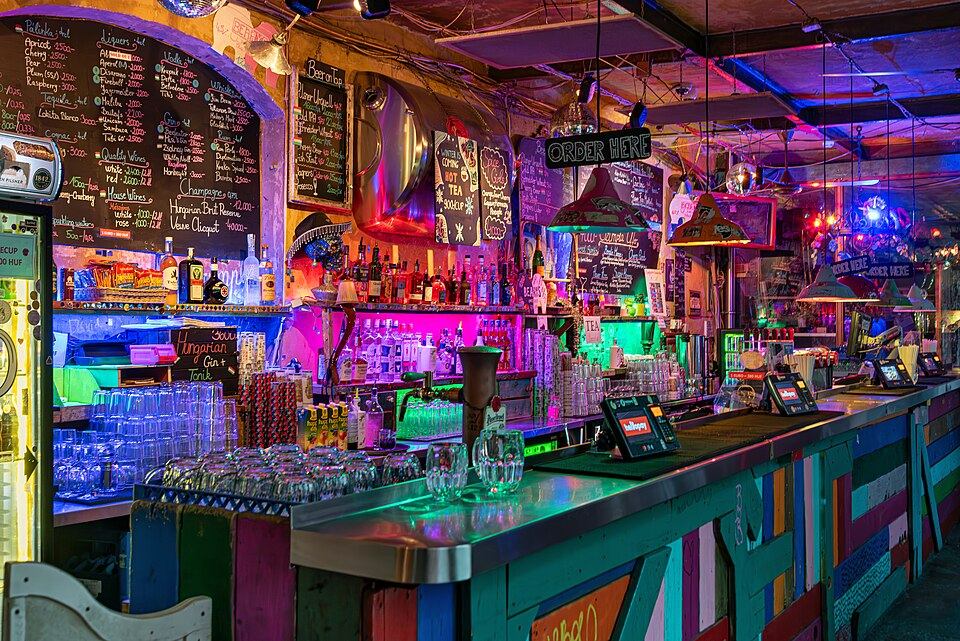
Photo: Jorge Franganillo via Wikimedia Commons, CC BY 2.0
.jpg)
At a Glance
- Ruin bars cluster mainly in District VII, the historic Jewish Quarter, inside converted courtyards and half-renovated apartment buildings.
- Szimpla Kert is the best-known and longest-running example, but it's one of dozens of similar venues in the same few blocks.
- The look is intentional: salvaged furniture, bathtub seating, graffiti-covered walls and string lights rather than polished design.
- Weekend nights get loud and crowded fast; arriving in the early evening gives you a calmer, easier-to-navigate version of the same place.
- Many ruin bars run a quieter daytime schedule with coffee and food service before the evening crowd arrives.
In this guide
Ruin bars grew out of Budapest's stock of half-emptied buildings in the city's seventh district, where owners in the early 2000s filled condemned courtyards and crumbling apartments with mismatched furniture, string lights and a bar instead of waiting on renovation money that wasn't coming. Two decades on, the format has become one of the city's defining nightlife exports, and it is concentrated in a small, walkable cluster of streets rather than scattered across town. This guide explains how the scene actually works, what a first visit looks and feels like, and how to enjoy it without overpaying or ending up somewhere that has already lost whatever made it interesting.
What Actually Makes a Bar a "Ruin Bar"
The term describes a specific aesthetic and business model more than a single chain or brand. A building, often a 19th-century apartment block with a central courtyard, sits empty or awaiting redevelopment. Rather than renovate it, operators fill the rooms and courtyard with secondhand sofas, old bathtubs turned into seating, bicycle-wheel light fixtures and layers of street art, then open it as a bar with minimal structural change. No two ruin bars look alike, and plenty of venues that get called ruin bars don't use the phrase to describe themselves at all. What they share is an unpolished, improvised feel and a courtyard or multi-room layout that encourages wandering rather than sitting at one table all night.
Where the Scene Is Concentrated
Almost all of the well-known ruin bars sit inside or just beside the Jewish Quarter, in District VII (Erzsébetváros). This is also the neighborhood's historic core, with synagogues and kosher bakeries on the same streets as late-night bars, which can feel like a strange juxtaposition until you understand how the district's layered history produced it. Streets like Kazinczy utca and the surrounding blocks hold enough bars within a five-minute walk of each other that a single night can realistically include three or four stops without any need to take a taxi between them.
Szimpla Kert and the Wider Field of Options
Szimpla Kert, which opened in the early 2000s inside a former factory building, is the oldest and most visited of the group, known for its sprawling multi-room layout, its weekend farmers' market, and the sheer density of odd decor crammed into every corner. It is a reasonable first stop for exactly that reason: it's easy to find and gives a condensed sense of the style. But it is not the only option, and plenty of regulars consider it the most touristy of the bunch rather than the most representative. Other long-running venues nearby lean harder into live music, DJ sets, or a quieter courtyard-garden feel, and new bars open and close often enough that any specific recommendation beyond the obvious entry point is likely to be out of date within a year or two. Treat the neighborhood as the destination and let whichever door looks interesting that night be the plan.
Comparing Ruin Bar Styles
| Style | What to Expect | Best Time to Visit |
|---|---|---|
| Classic multi-room ruin bar | Several small connected rooms, each with different furniture and lighting, often spread across more than one floor | Early evening for a calmer look, later for full energy |
| Open-air courtyard bar | A central yard with outdoor seating, sometimes under tarps or string lights, more weather-dependent | Warmer months, early evening before it fills |
| Live-music or DJ-focused bar | A defined stage or booth area, cover charge more likely on weekend nights, higher noise level | Check the schedule in advance; these run on specific nights |
| Daytime café-bar hybrid | Coffee, light food and a calmer crowd before the evening shift begins | Mid-afternoon |
A Realistic Night Out: Timing, Crowds and Noise
Friday and Saturday nights in this district get genuinely crowded, with lines forming at the more famous doors and noise levels that make conversation difficult in the busiest rooms. If you'd rather see the space than fight the crowd, go earlier in the evening, on a weeknight, or treat your first stop as an early visit before moving on elsewhere for the later hours. Some venues charge a cover on weekend nights, especially when there's live music or a ticketed event; others never do. There isn't a single rule across the district, so it's worth checking at the door rather than assuming either way.
Etiquette and Unwritten Rules for Visitors
Service at most ruin bars works like a typical European bar: you order and pay at the counter rather than waiting for table service, and you generally don't need to flag down staff to get a tab started. Tipping conventions follow the same general pattern used across Budapest's bars and restaurants, which is covered in more detail in the guide to dining etiquette and tipping. Learning a handful of basic greetings before you go, which the guide to Hungarian phrases and etiquette covers, tends to get a friendlier reception than defaulting straight to English, even though most bar staff in this district speak it comfortably. Because many of these buildings are genuinely old and only lightly modified, be mindful of narrow stairwells, low doorframes and uneven courtyard surfaces rather than treating the space like a purpose-built venue.
Safety, Cost Tiers and Getting Home
Drink prices in the ruin bar district generally sit in the budget-to-moderate range compared with hotel bars or upscale cocktail lounges elsewhere in the city center, though exact prices shift often enough that checking a venue's own menu on arrival is more reliable than any fixed figure. Most places accept cards, but carrying some cash as a backup is sensible, particularly for smaller bars or cover charges at the door. In crowded standing areas, keep bags zipped and in front of you rather than slung behind you, the same precaution worth taking in any dense nightlife crowd. For getting back to your accommodation afterward, the public transportation guide covers night bus routes that keep running after the metro closes, which is often simpler and cheaper than hailing a street taxi late at night.
Common Mistakes to Avoid
- Assuming every ruin bar looks and feels like Szimpla Kert, then being underwhelmed when a smaller venue turns out to be quieter or more modest.
- Showing up only on a Friday or Saturday night and being surprised by lines, cover charges and noise that make the space hard to actually see.
- Carrying only a card and no cash, then finding a smaller bar or door charge that's cash-only.
- Leaving a bag or phone unattended on a table in a packed standing-room area.
- Treating the neighborhood as a one-stop destination instead of planning to move between two or three venues over the course of a night.
Frequently Asked Questions
Is Szimpla Kert the only ruin bar worth visiting?
No. It's the most famous and the easiest for a first-timer to find, but it's one of many venues within the same few blocks of District VII. Treat it as a starting point rather than the whole scene.
Do ruin bars charge a cover fee?
Some do on weekend nights, particularly if there's a live band or DJ event, and others never charge one. There's no single rule across the district, so it's worth checking at the door before heading in.
Is the ruin bar district safe for solo travelers?
The area is well-trafficked and heavily visited, which generally makes it comfortable for solo exploring. Standard nightlife precautions apply: watch your drink, keep track of your belongings in crowded standing areas, and have a plan for getting back to where you're staying.
What age range typically visits ruin bars?
The crowd is mostly in their twenties and thirties, including a large mix of international visitors and local young adults, though some venues with a calmer daytime schedule draw a broader range of ages.
Can I visit a ruin bar earlier in the day instead of at night?
Many of them run a quieter daytime schedule with coffee and food service, which is a good option if you want to see the decor and layout without the evening crowd and noise.